
IMF to increase Egypt's bailout loan to $8 billion to shore up its economy
Egyptian economy has been hit hard by years of government austerity, covid pandemic, Russia-Ukraine war and the Israel-Hamas war in Gaza
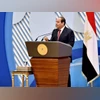 "IMF to increase Egypt's bailout loan to $8 billion to shore up its economy")
Explore Business Standard

Associate Sponsors
Co-sponsor
Egyptian economy has been hit hard by years of government austerity, covid pandemic, Russia-Ukraine war and the Israel-Hamas war in Gaza
The executive board of the International Monetary Fund confirmed a deal with Egypt to increase its bailout loan from USD 3 billion to USD 8 billion, in a move that is meant to shore up the Arab country's economy which is hit by a staggering shortage of foreign currency and soaring inflation.
In a statement late Friday, the board said its decision would enable Egypt to immediately receive about USD 820 million as part of the deal which was announced earlier this month.
The deal was achieved after Egypt agreed with the IMF on a reform plan that is centred on floating the local currency, reducing public investment and allowing the private sector to become the engine of growth, the statement said.
Egypt has already floated the pound and sharply increased the main interest rate. Commercial banks are now trading the US currency at more than 47 pounds, up from about 31 pounds. The measures are meant to combat ballooning inflation and attract foreign investment.
The Egyptian economy has been hit hard by years of government austerity, the coronavirus pandemic, the fallout from Russia's full-scale invasion of Ukraine, and most recently, the Israel-Hamas war in Gaza. The Houthi attacks on shipping routes in the Red Sea have slashed Suez Canal revenues, which is a major source for foreign currency. The attacks forced traffic away from the canal and around the tip of Africa.
Egypt is facing significant macroeconomic challenges that have become more complex to manage given the spillovers from the recent conflict in Gaza and Israel. The disruptions in the Red Sea are also reducing Suez Canal receipts, which are an important source of foreign exchange inflows and fiscal revenue, said IMF's Managing Director Kristalina Georgieva.
The IMF said such external shocks, combined with delayed reforms, have negatively impacted economic activity. Growth slowed to 3.8 per cent in the fiscal year 2022-23 due to weak confidence and foreign currency shortages, and is projected to slow further to 3 per cent in the fiscal year 2023-24 before recovering to about 4 percent in 2024-25, the IMF statement said.
The annual inflation rate was 36 per cent in February, but is expected to ease over the medium term, the IMF said.
The currency devaluation and interest rate hike have inflicted further pain on Egyptians already struggling with skyrocketing prices over the past years. Nearly 30 per cent of Egyptians live in poverty, according to official figures.
Finance Minister Mohamed Maait said the confirmation by the IMF's executive board reflects the importance of the correcting measures taken by the government.
Egypt also this month signed a deal with the European Union that includes a 7.4 billion-euro (USD 8 billion) aid package for the most populous Arab country over three years.
To quickly inject much-needed funds into Egypt's staggering economy, the EU intends to fast-track 1 billion euros (USD 1.1 billion) of the package, using an urgent funding procedure that bypasses parliamentary oversight and other safeguards, according to European Commission President Ursula von der Leyen.
(Only the headline and picture of this report may have been reworked by the Business Standard staff; the rest of the content is auto-generated from a syndicated feed.)
First Published: Mar 30 2024 | 7:05 PM IST

