
In first address, Iran's Prez-elect Pezeshkian vows to serve all Iranians
At the mausoleum of Ayatollah Ruhollah Khomeini, president-elect Masoud Pezeshkian expressed his commitment to overcoming challenges and providing prosperity for all Iranians
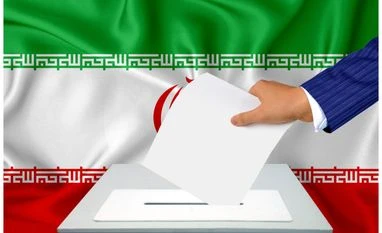 "In first address, Iran's Prez-elect Pezeshkian vows to serve all Iranians")
Explore Business Standard

Associate Sponsors
Co-sponsor
At the mausoleum of Ayatollah Ruhollah Khomeini, president-elect Masoud Pezeshkian expressed his commitment to overcoming challenges and providing prosperity for all Iranians
Iran's president-elect, Masoud Pezeshkian, delivered his inaugural address in Tehran following his victory in the election run-off against Saeed Jalili, a prominent hardline candidate. Pezeshkian, positioned as a centrist and reformist figure, emphasised the significance of his win in opening a "new chapter" for Iran, Al Jazeera reported.
At the mausoleum of Ayatollah Ruhollah Khomeini, he expressed his commitment to overcoming challenges and providing prosperity for all Iranians.
"We are ahead of a big trial, a trial of hardships and challenges, simply to provide a prosperous life to our people," Pezeshkian remarked, reflecting on the responsibilities that lay ahead after securing nearly 16.4 million votes out of more than 30 million cast.
His opponent, Jalili, acknowledged Pezeshkian's victory and urged unity in supporting the elected leader. "Not only should he be respected, but now we must use all our strength and help him move forward with strength," Jalili said in a broadcast on state television, as reported by Al Jazeera.
The election, notable for its relatively high turnout of 49.8 per cent, showcased a divided electorate with significant portions abstaining or protesting silently. Pezeshkian's campaign, focused on reform and greater openness to the international community, resonated amid Iran's socio-political complexities. The election followed a period of uncertainty after the untimely death of Ebrahim Raisi, prompting a snap election to determine his successor.
Celebrations erupted among Pezeshkian's supporters upon the announcement of his victory, which also drew congratulations from global leaders including Russian President Vladimir Putin. However, responses from Western leaders awaited further developments in Iran's political landscape.
Pezeshkian's transition to the presidency is anticipated within 30 days, pending parliamentary procedures and formal endorsement by Supreme Leader Ayatollah Ali Khamenei. His tenure is expected to navigate Iran through economic challenges exacerbated by international sanctions and internal governance issues.
Analysts speculate on the potential implications of Pezeshkian's presidency, suggesting a pragmatic foreign policy stance that could facilitate renewed negotiations over Iran's nuclear program. The country's approach to international relations, particularly with regard to the stalled 2015 nuclear deal, remains a focal point amidst broader geopolitical tensions.
Tohid Asadi, a professor at Tehran University, highlighted the electorate's desire for policy shifts both domestically and internationally. "Pezeshkian's victory showed that many Iranians are interested in a shift in domestic and foreign policies," Asadi remarked, underscoring the dynamic nature of Iranian politics where the president's influence coalesces with broader institutional frameworks.
The complexity of Iran's political establishment, notably the role of the Supreme National Security Council in shaping foreign policy, underscores the distributed decision-making within the Iranian government.
Mostafa Khoshcheshm, a Tehran-based analyst, cautioned against expecting radical shifts in Iran's foreign policy without broader consensus within the political elite.
"The ball is going to be in the court of the United States and the West," Asadi continued, noting the pivotal role of international dynamics in shaping Iran's strategic direction. The upcoming US presidential election adds another layer of uncertainty, influencing prospects for future negotiations between Iran and global powers.
As the ninth elected president of Iran, Pezeshkian inherits a nation grappling with economic constraints and geopolitical pressures, Al Jazeera reported.
(Only the headline and picture of this report may have been reworked by the Business Standard staff; the rest of the content is auto-generated from a syndicated feed.)
First Published: Jul 07 2024 | 7:41 AM IST

