
India, US facing same security challenge from China: Pacom Commander
"Two skirmishes now in over the past nine or 10 months on that border, as they continue to get pressurised by the PRC for border gains"
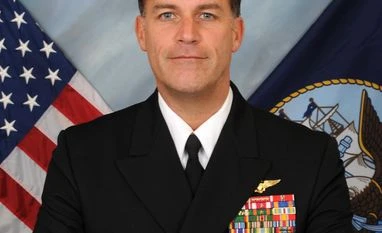 "India, US facing same security challenge from China: Pacom Commander")
WebinarsNew
Deep DiveNew
Explore Business Standard
"Two skirmishes now in over the past nine or 10 months on that border, as they continue to get pressurised by the PRC for border gains"
India and the United States are facing the same security challenges from China, a top American commander said here Wednesday, noting that the Biden Administration is not only providing assistance to New Delhi with cold weather gear, as it defends its border on the northern side, but also helping India in its effort to develop its own industrial base.
We value our partnership with India, and we've been increasing it and doing a lot more, over time. They have the same security challenge, primary security challenger that we do, and it's real on their northern border. Two skirmishes now in over the past nine or 10 months on that border, as they continue to get pressurised by the PRC for border gains, Admiral John Christopher Aquilino, commander of US Indo-Pacific Command, told members of the House Armed Services Committee during a hearing on Indo-Pacific National Security Challenges.
Admiral Aquilino was responding to a question from Indian American Congressman Ro Khanna. I would like you to reflect on the importance of the relationship -- postcolonialism India and China had a relationship to emerge as the Asian voice. But that relationship now has really soured with a concern that there should not be a hegemon in Asia and that China is treating other countries as junior partners, Khanna said.
It seems to me that this gives us an opportunity to ensure that China doesn't emerge as a hegemon to strengthen the relationship with India, said the Indian American Congressman.
Aquillino said both India and the US have the same security challenges. We also have the desire to operate together, based on the world's largest democracy. We have common values, and we also have people, the people ties for a number of years. I met with General Chauhan, my counterpart, at the Raisina Dialogue not long ago. I've been to India five times now in the past two years.
So, the importance of that relationship can't be overstated. We operate together, frequently, with the Quad Nations. Again, the Quad is not a security agreement, it's diplomatic and economic, but the Quad Nations come together, often, to operate together in multiple exercises. So, we continue to work to be interoperable and to expand the relationship, he observed.
In response to another question from Congressman Patrick Ryan, the admiral said India is a critical partner and besides conducting joint war exercises in the Malabar, the US is providing assistance to India as it applies to cold weather gear and other capabilities that they might need, as they defend their border on the northern side.
But additionally, we're expanding our cooperation in the form of production as India tries to work to develop its own industrial base. So, C-130 critical components made in India, helicopter critical frameworks made in India. That is expanding the partnership and moving them towards self-sufficiency and increased partnership with the United States, Aquilino added.
Referring to the recently launched India-US initiative for critical and emerging technology announced by the national security advisors of the two countries, Jedidiah P Royal, Principal Deputy Assistant Secretary of Defense for Indo-Pacific Security, said: We're already delivering offers under the context of the ISAT arrangement. This is a real moment of convergence for the United States and India and we're looking to take full advantage of it, going forward.
Testifying before the committee, Royal said: India faces the same challenger that we face in the region. So what we're seeing right now is a moment of strategic convergence in our relationship with the government of India. There's a lot of momentum in that regard. With respect to your question on from whom do they buy their weapons, we believe that they are through a generational process of looking to diversify off of traditional suppliers.
We want to make sure that the US defence industrial base is in the best position possible to be India's partner of choice moving forward, he said.
In response to another question, Aquilino said the US is working with our Indian partners both to advance their warfighting capabilities together to ensure that the US is sharing information that's needed.
We do have the same strategic competitor or whatever definition we want to put on it and in my time over in the theatre now for five years straight, it has increased exponentially. It's trending in the right direction. They're really good partners, he said.
(Only the headline and picture of this report may have been reworked by the Business Standard staff; the rest of the content is auto-generated from a syndicated feed.)
First Published: Apr 20 2023 | 10:03 AM IST


 Connect with us on WhatsApp