
Iran raises gasoline prices for first time since deadly protests in 2019
The new pricing system implemented Saturday adds a third pricing level to the country's long-running subsidy system
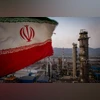 "Iran raises gasoline prices for first time since deadly protests in 2019")
WebinarsNew
Deep DiveNew
Explore Business Standard
The new pricing system implemented Saturday adds a third pricing level to the country's long-running subsidy system
Iran introduced a new pricing tier on Saturday for its nationally subsidised gasoline, attempting to rein in spiralling costs for the first time since a price hike in 2019 that sparked nationwide protests and a crackdown that reportedly killed over 300 people.
Cheap gasoline has been viewed for generations as a birthright in Iran, sparking mass demonstrations as far back as 1964 when a price increase forced the shah to put military vehicles on the streets to replace those of striking taxi drivers.
But Iran's theocracy faces a growing squeeze from the country's rapidly depreciating rial currency and economic sanctions imposed due to Tehran's nuclear program.
That has made the cost of having some of the world's cheapest gasoline at a few pennies per gallon that much more expensive. However, the government's hesitant move toward increasing prices likely signals it wants to avoid any confrontation with the nation's exhausted public after Israel launched a 12-day war on the country in June.
Our discontent has no result, fumed Saeed Mohammadi, a teacher who works as a taxi driver in his spare time to make ends meet. The government does whatever it likes. They don't ask people if they agree or not.
The new pricing system implemented Saturday adds a third pricing level to the country's long-running subsidy system. The revised structure allows motorists to continue receiving 60 litres (15 gallons) per month at the subsidised rate of 15,000 rials per litre, or 1.25 US cents, and the next 100 litres (26 gallons) will remain at 30,000 rials a litre, or 2.5 cents.
Anything purchased beyond that falls under the new pricing scheme of 50,000 rials per litre, or about 4 cents. Iran introduced fuel rationing back in 2007, but that has yet to ease demand for the ultracheap gasoline.
Even at that new rate, Iranian gasoline prices remain among the lowest in the world.
The difference between the cost of production and delivering the fuel and the price at the pump is the subsidy paid by Iran's government. The Paris-based International Energy Agency ranked Iran as paying the world's second-highest energy subsidy costs in 2022, behind only Russia. The IEA put Iran's oil subsidies at $52 billion that year, with Iranian officials acknowledging tens of billions of dollars a year go toward artificially keeping energy prices low.
Tehran-based economist Hossein Raghfar said that since 2009, the price of gasoline has grown 15-fold, offering a pessimistic view of the government's subsidies.
Not only did it fail in lessening the budget deficit, but it also trapped the country's economy in a negative loop of inflation and budget deficit, he said.
Hamid Rezapour, a 35-year-old bank teller, said he believed Iran's government had no choice except to increase the price to manage the country's economy.
It needs more money to pay for public needs. he said. To me, it is an indirect tax though in a messy economy it barely works.
The move is the most significant change to Iran's fuel-subsidy system since 2019, when a sudden 50 per cent jump in subsidised prices and a 300 per cent increase in the rate for purchases beyond quota sparked nationwide protests.
Security forces cracked down on demonstrations across 100 cities and towns, with some protesters burning down gas stations and banks. The crackdown that followed killed at least 321 people, according to Amnesty International. Thousands were detained.
Critics say every single 10,000-rial increase in gasoline prices will lead to as much as a 5 per cent increase in inflation. Currently, the nation is struggling with an annual inflation rate of some 40 per cent.
But cheap gas provides an opportunity for employment for the country. There are 25 million vehicles, including 3 million public and government-affiliated cars, as well as 6 million motorbikes in the Islamic Republic. Reportedly, more than 8 million Iranians work as taxi drivers through online platforms, nearly 10 per cent of the population. Uber, meanwhile, has 8.8 million drivers and couriers worldwide.
It is a start for amending the trend of fuel consumption, Oil Minister Mohsen Paknejad earlier told journalists.
Officials' comments suggest Iran may seek steeper price increases in the future, as the government reviews prices every three months.
Mohammad Reza Assadi, a 60-year-old taxi driver, offered scepticism that any further protest would make a change.
People poured into streets over hike the gasoline price in the past, he said, but they returned home tired and hopeless later at dusk.
(Only the headline and picture of this report may have been reworked by the Business Standard staff; the rest of the content is auto-generated from a syndicated feed.)
First Published: Dec 13 2025 | 11:04 AM IST

