Home / World News / From Nepal to Dhaka: A growing list of India's neighbours shaken by protest
From Nepal to Dhaka: A growing list of India's neighbours shaken by protest
From Nepal's social media ban riots to Bangladesh's student uprising and Sri Lanka's economic collapse, India's neighbours face repeated upheavals with regional fallout
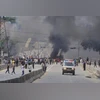
An ambulance drives past protesters burning tires to block streets during protests against social media ban and corruption in Kathmandu, Nepal, Tuesday, Sept. 9, 2025. (Photo:PTI)
4 min read Last Updated : Sep 09 2025 | 5:35 PM IST
Nepal’s protests have erupted into a firebomb, with enraged crowds torching the private residences of President Ram Chandra Poudel and Prime Minister KP Sharma Oli on Tuesday, September 9. What began as anger over a sweeping social media ban has very quickly escalated into the deadliest street clashes the country has seen in decades, leaving at least 19 people dead and hundreds injured. As a consequence, Oli stepped down from his post.
The unrest began as a revolt against the sudden blocking of major social media platforms but swiftly widened into a protest against corruption, unemployment, and political stagnation.
In the past three years, India’s neighbourhood has witnessed massive political upheavals that have led to the collapse of governments. The tremors have come in different shapes and intensities—a financial meltdown in Sri Lanka that spilled onto the streets, unseating the once-powerful Rajapaksas; a populist wave in Pakistan following the toppling of Imran Khan's government, and last year's student-led protests in Bangladesh that forced Sheikh Hasina, one of the region’s longest-serving leaders, into exile.
The 2022 uprising in Sri Lanka
Sri Lanka’s mass uprising began in March 2022. On the brink of an unprecedented economic collapse that left citizens without fuel, medicine and steady electricity, protests erupted in Sri Lanka. Hundreds of thousands of people (mainly the youth) took to the streets to protest against the then president Gotabaya Rajapaksa over his mismanagement of fiscal debt, ban on fertilisers, and corruption. The protests turned violent in May which resulted in the death of around 7-8 agitators which further angered the masses.
By July, demonstrators stormed the president’s office and the prime minister’s residence in Colombo, forcing Gotabaya Rajapaksa to resign and flee the country, toppling the once-powerful family dynasty.
Pakistan’s May 9 episode
Pakistan saw repeated upheavals following the arrest of former prime minister Imran Khan in May 2023. This was coupled by the country's worsening economy with a record inflation peaking at 38 per cent. In May 2023, their currency was on the verge of collapse, and in the previous year, foreign reserves fell to less than three weeks of import cover by December 2022.
On what is widely called the 'May 9' episode in 2023, protesters attacked government and military sites, leading to violent confrontations. According to official estimates, nearly 8 died and thousands were arrested, along with substantial damage to public and military property. In the months and years that followed, the state moved to detain thousands of activists, pursue legal action against organisers, and tighten communications and public-order controls.
Bangladesh’s 2024 'student revolt'
In July 2024, Bangladesh saw a sharp political rupture after an uprising that led to the removal of Sheikh Hasina as prime minister the next month. The protests started with discontent over the government’s re-introduction of a quota system reserving 56 per cent of government jobs for various groups.
Students and youth took to the streets, calling it unfair amid high unemployment. Clashes with security forces left at least 266 dead, including minors. Protesters toppled statues and attacked family properties linked to Sheikh Hasina, who resigned and fled to India on August 5. Nobel laureate Muhammad Yunus now heads an interim government.
What it means for India
For India, the turbulence in its neighbourhood signifies more than just a series of domestic crises near its borders. The frontiers that New Delhi shares with Nepal and Bangladesh are porous, and a long and tense boundary with Pakistan, along with vital economic and strategic ties with Sri Lanka. Political upheavals in these countries have direct consequences, from refugee inflows and cross-border security concerns to trade disruptions and shifting diplomatic equations.

 "From Nepal to Dhaka: A growing list of India's neighbours shaken by protest")


