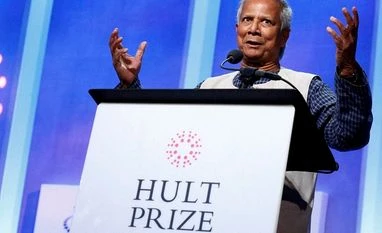
Nobel Peace laureate Muhammad Yunus convicted, to face jail in Bangladesh
Yunus was awarded the Nobel Prize for Peace in 2006 for pioneering the use of microcredit and lifting millions out of poverty
BS Web Team New Delhi Nobel Peace Prize winner Muhammad Yunus was on Monday convicted in a labour law case in Bangladesh and will face a jail term of six months, news agency AFP reported. Yunus was awarded the Nobel Prize for Peace in 2006 for pioneering the use of microcredit and lifting millions out of poverty.
Yunus was questioned by Bangladesh's official anti-graft watchdog, the Anti-corruption Commission, on charges of money laundering and fund embezzlement. Yunus, chairman of Grameen Telecom, was accused of violating labour laws. A dozen other colleagues of Yunus faced similar charges in the case.
Grameen Telecom owns 34.20 per cent shares of Bangladesh's largest mobile phone company Grameenphone, a subsidiary of Norway's telecom giant Telenor. Investigators say Yunus and others misappropriated over $2.28 million from the workers fund.
In August, more than 170 global leaders and Nobel laureates, in an open letter, urged Bangladeshi Prime Minister Sheikh Hasina to suspend legal proceedings against Yunus.
The leaders, including former US President Barack Obama, former UN Secretary-General Ban Ki-moon and more than 100 Nobel laureates, said in the letter that they were deeply concerned by recent threats to democracy and human rights in Bangladesh.
"We are alarmed that he has recently been targeted by what we believe to be continuous judicial harassment", said the letter.
Hasina responded by saying she would welcome international experts and lawyers to come to Bangladesh to assess the legal proceedings and examine documents involving the charges against Yunus.
In 1983, Yunus founded Grameen Bank, which gives small loans to entrepreneurs who would not usually qualify for bank loans. The bank's success in lifting people out of poverty led to similar microfinancing efforts in many other countries.
(With agency inputs)

 "Nobel Peace laureate Muhammad Yunus convicted, to face jail in Bangladesh")


