
S Korea-US consulting group meets in response to North Korea's threats
The Nuclear Consultative Group was established as part of agreements Presidents Joe Biden and Yoon Suk Yeol made when they met in April
 "S Korea-US consulting group meets in response to North Korea's threats")
Explore Business Standard
The Nuclear Consultative Group was established as part of agreements Presidents Joe Biden and Yoon Suk Yeol made when they met in April
A bilateral consulting group of South Korean and US officials met Tuesday in Seoul to discuss strengthening their nations' deterrence capabilities against North Korea's evolving nuclear threats.
The Nuclear Consultative Group was established as part of agreements Presidents Joe Biden and Yoon Suk Yeol made when they met in April.
Seoul officials say the body is tasked with sharing information on nuclear and strategic weapons operation plans and discussing joint operations. The US would retain operational control of US nuclear weapons, and Washington officials say the group's establishment and other steps announced in April were meant to ease South Korean worries about North Korean provocations while keeping Seoul from pursuing its own nuclear program.
The group's inaugural meeting will serve as an important starting point to establish powerful, effective Korea-US extended deterrence, Yoon said during a televised Cabinet Council meeting, referring to a US security commitment to use full U.S. capabilities, including nuclear, to protect its allies.
Yoon said the allies will make substantial efforts to resolve North Korean nuclear threats based on the Korea-U.S. alliance that is upgraded with a new, nuclear-based paradigm.
Yoon visited a conference room to meet the South Korean and US officials at the group's inaugural meeting at the presidential office in Seoul. Yoon told them the two countries must bolster their deterrence capabilities to make North Korea not dare to think about using nuclear weapons, according to Yoon's office.
Earlier, Sabrina Singh, a deputy Pentagon press secretary, told reporters Monday that the goal of the meeting is to begin implementing the Biden-Yoon declaration in April, which reaffirms our joint extended deterrence in the region.
The meeting was co-chaired by US National Security Coordinator for the Indo Pacific Affairs Kurt Campbell and South Korea's deputy national security director Kim Tae-hyo.
North Korea's nuclear ambitions have taken on new urgency after it has openly threatened to use nuclear weapons in potential conflicts with its rivals and carried out about 100 missile tests since the start of last year.
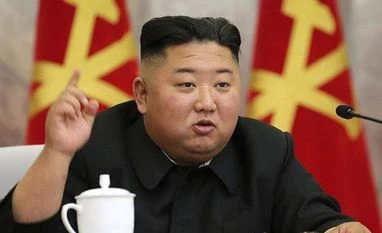
Last week, North Korea conducted a second test-flight of a more mobile, powerful intercontinental ballistic missile designed to strike the mainland US. After observing that launch, North Korean leader Kim Jong Un vowed to further bolster his country's nuclear fighting capabilities.
During their April summit in Washington, Yoon and Biden also agreed on the periodic docking a US nuclear-armed submarine in South Korea and bolster joint training exercises. Biden also stated that any North Korean nuclear attack on the US or its allies would result in the end of whatever regime took such action.
North Korea has responded that such steps proved the allies' hostility toward North Korea. It threatened to further bolster its escalatory nuclear doctrine in protest.
(Only the headline and picture of this report may have been reworked by the Business Standard staff; the rest of the content is auto-generated from a syndicated feed.)
First Published: Jul 18 2023 | 12:04 PM IST


