Home / World News / Trial starts over Trump admin's deployment of National Guard to Los Angeles
Trial starts over Trump admin's deployment of National Guard to Los Angeles
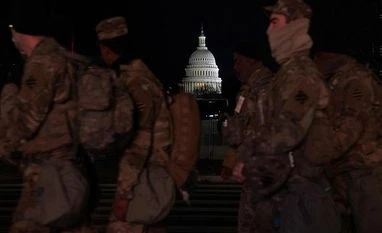
Trump said he was deploying the National Guard across Washington & taking over the city's police dept in hopes of reducing crime, even as the mayor has noted crime is falling in the nation's capital
Maj. Gen. Scott Sherman said military tapped to assist with domestic operations can protect federal property and federal agents in their mission carrying out federal operations. (File Photo)
4 min read Last Updated : Aug 12 2025 | 8:06 AM IST
A deputy commanding general testified Monday that military forces called in to assist with immigration raids in Los Angeles were allowed to take some law enforcement actions despite a federal law that prohibits the president from using the military as a domestic police force.
Maj. Gen. Scott Sherman said military tapped to assist with domestic operations can protect federal property and federal agents in their mission carrying out federal operations. He said they could take certain law enforcement actions, such as setting up a security perimeter outside of federal facilities, if a commander on the ground felt unsafe. ALSO READ: Trump admin pulls back deployment of 2,000 National Guard troops in LA Sherman testified at the start of a three-day trial over whether President Donald Trump's administration violated the 1878 Posse Comitatus Act when it deployed National Guard soldiers and US Marines to Los Angeles following June protests over immigration raids.
On Monday, Trump said he was deploying the National Guard across Washington, DC, and taking over the city's police department in the hopes of reducing crime, even as the mayor has noted that crime is falling in the nation's capital.
The trial in San Francisco could set a precedent for how Trump can deploy the guard in the future in California or other states.
The Trump administration federalised California National Guard members and sent them to the second-largest US city over the objections of Democratic Gov. Gavin Newsom and city leaders after protests erupted on June 7 when Immigration and Customs Enforcement officers arrested people at multiple locations. ALSO READ: Trump takes control of DC Police, deploys National Guard in historic move
The Department of Defense ordered the deployment of roughly 4,000 California National Guard troops and 700 Marines to Los Angeles. Most of the troops have since left, but 250 National Guard members remain, according to the latest figures provided by the Pentagon.
California is asking Judge Charles Breyer to order the Trump administration to return control of the remaining troops to the state and to stop the federal government from using military troops in California to execute or assist in the execution of federal law or any civilian law enforcement functions by any federal agent or officer.
Newsom won an early victory from Breyer, who found the Trump administration violated the Constitution's 10th Amendment, which defines power between federal and state governments, and exceeded its authority.
The Trump administration immediately appealed, arguing that courts can't second-guess the president's decisions. It secured a temporary halt, allowing control of the California National Guard to stay in federal hands as the lawsuit unfolds.
After their deployment, the guard members accompanied federal immigration officers on raids in Los Angeles and at two marijuana farm sites in Ventura County while Marines mostly stood guard around a federal building in downtown Los Angeles that includes a detention centre at the core of protests.
Trump federalised members of the California National Guard under a law allows the president to call the National Guard into federal service when the country is invaded, when there is a rebellion or danger of a rebellion against the authority of the Government, or when the president is otherwise unable to execute the laws of the United States.
Breyer found the protests in Los Angeles fall far short of rebellion.' Since June, federal agents have rounded up immigrants without legal status to be in the US from Home Depots, car washes, bus stops, and farms. Some US citizens have also been detained.
Ernesto Santacruz Jr., the field office director for the Department of Homeland Security in Los Angeles, said in court documents that the troops were needed because local law enforcement was slow to respond when a crowd gathered outside the federal building to protest the June 7 immigration arrests.
The presence of the National Guard and Marines has played an essential role in protecting federal property and personnel from the violent mobs, Santacruz said.
(Only the headline and picture of this report may have been reworked by the Business Standard staff; the rest of the content is auto-generated from a syndicated feed.)


 "Trial starts over Trump admin's deployment of National Guard to Los Angeles")

