Home / World News / Trump deploys National Guard to Memphis, calling it 'replica' of Washington
Trump deploys National Guard to Memphis, calling it 'replica' of Washington
That was a reference to last month, when the president deployed National Guard troops to the nation's capital and federalised the city's police force in a crackdown he has since argued reduced crime
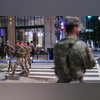
Members of the Ohio National Guard patrol 14th Street in Washington on Aug. 23 | Image: Bloomberg
3 min read Last Updated : Sep 16 2025 | 8:12 AM IST
President Donald Trump on Monday signed an order sending the National Guard into Memphis to combat crime, constituting his latest test of the limits of presidential power by using military force in American cities.
Trump made the announcement with Republican Tennessee Gov Bill Lee visiting the Oval Office, calling what's coming a "replica of our extraordinarily successful efforts" in Washington.
That was a reference to last month, when the president deployed National Guard troops to the nation's capital and federalised the city's police force in a crackdown he has since argued reduced crime.
Trump said that, in addition to troops, the push in Memphis would involve officials from various federal agencies, including the FBI, Drug Enforcement Administration, Immigration and Customs Enforcement and the US Marshall's service: "We're sending in the big force now." Shortly before Trump's announcement, the White House said on social media that the Memphis total crime rate was higher than the national average and suggested that the rate had increased since last year, bucking national trends.
That's despite Memphis police recently reporting decreases across every major crime category in the first eight months of 2025 compared to the same period in previous years. Overall crime hit a 25-year low, while murder hit a six-year low, police said.
Despite the overall decrease, Memphis has dealt with stubborn gun violence problems for years. In 2023, the city set a record with more than 390 homicides.
Tennessee's governor embraced the troop deployment as part of a broader law enforcement surge in Memphis. Lee said Monday that he was "tired of crime holding the great city of Memphis back." Trump first suggested he'd be deploying the National Guard to Memphis on Friday, draying pushback from the Democratic leader of Memphis, which is majority Black.
"I did not ask for the National Guard, and I don't think it's the way to drive down crime," Mayor Paul Young told a news conference Friday while acknowledging the city remained high on too many "bad lists." Speculation had centred on Chicago as Trump's next city to send in the National Guard and other federal authorities. But the administration has faced fierce resistance from Democratic Illinois J B Pritzker and other local authorities.
Trump said Monday, "We're going to be doing Chicago probably next" but also suggested that authorities would wait and not act immediately there.
"We want to save these places," Trump said. He singled out St Louis and Baltimore, but didn't say either place would be getting federal forces or the National Guard.
(Only the headline and picture of this report may have been reworked by the Business Standard staff; the rest of the content is auto-generated from a syndicated feed.)


 "Trump deploys National Guard to Memphis, calling it 'replica' of Washington")

