
Trump's pick to oversee US public lands and waters faces Senate hearing
Trump in November tapped Burgum to be interior secretary and to lead the new National Energy Council, which is charged with promoting oil, gas and other energy development
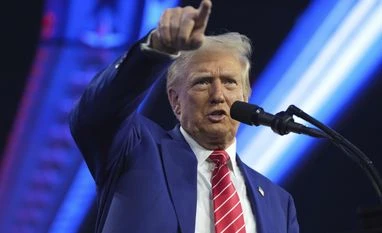 "Trump's pick to oversee US public lands and waters faces Senate hearing")
Explore Business Standard

Associate Sponsors
Co-sponsor
Trump in November tapped Burgum to be interior secretary and to lead the new National Energy Council, which is charged with promoting oil, gas and other energy development
Former North Dakota Gov. Doug Burgum is due before a Senate committee Thursday as lawmakers consider the Republican's nomination to be chief steward of US public lands and waters.
President-elect Donald Trump in November tapped Burgum to be interior secretary and to lead the new National Energy Council, which is charged with promoting oil, gas and other energy development.
The Interior Department oversees a half-billion acres of federal land and vast areas offshore. Combined those areas produce about one-quarter of US oil, or more than 1 billion barrels of crude annually, making them a flashpoint in the debate over how to address climate change.
President Joe Biden's administration scaled back new oil and gas sales from public reserves as part of its efforts to curb climate change. Nevertheless, oil production hit record levels under the Democrat as high prices spurred drilling on lands that were previously leased.
Burgum is an ultra-wealthy software industry entrepreneur who grew up on his family's farm. The two-term governor of oil-rich North Dakota endorsed Trump after ending his own 2024 presidential bid.
The energy council he would chair could play a key role in Trump's effort to sell more oil and other energy sources to allies in Europe and around the globe.
Trump has been hostile to renewable energy including offshore wind. It's uncertain how that rhetoric will translate into policies at the Interior Department.
North Dakota is among numerous states that have seen a rapid expansion of wind power in recent years. Burgum outlined plans as governor to make the state carbon neutral by 2030. And he touted a pipeline that would be used to capture greenhouse gases blamed in climate change and store them underground.
Burgum has described such projects as lucrative business opportunities. Carbon-capture sceptics say the technology is untested at scale and allows the fossil-fuel industry to continue largely unchanged.
The Interior Department's mandate extends beyond fossil fuels to include grazing, mining, fish and wildlife conservation, the National Park system and trust responsibilities for more than 500 Native American and Alaska Native tribes.
Trump's first term featured bitter fights over actions that rolled back protections for endangered species and accelerated approvals for highways, pipelines and other projects. Those moves were largely blocked by lawsuits or reversed under Biden.
Thursday's hearing before the Senate Energy and Natural Resources Committee comes after protesters on Wednesday repeatedly interrupted proceedings for another member of Trump's energy team secretary of energy nominee Chris Wright.
Wright pledged to promote all sources of American energy and acknowledged burning fossil fuels causes climate change.
(Only the headline and picture of this report may have been reworked by the Business Standard staff; the rest of the content is auto-generated from a syndicated feed.)
First Published: Jan 16 2025 | 11:47 AM IST

