US President
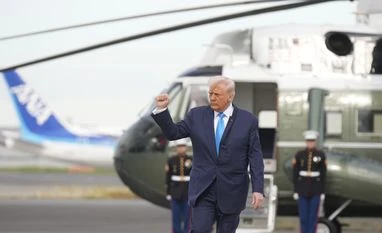
Donald Trump has sparked a diplomatic storm with Nigeria after threatening to send American forces “guns-a-blazing” to “wipe out Islamic terrorists” accused of killing Christians in the country. The remarks, made on his social media platform Truth Social on November 1, prompted a sharp but measured response from the African nation, which said it would welcome US assistance against terrorism but that its territorial integrity must be respected. The exchange has revived debate over religious violence in Nigeria, US foreign aid, and Trump’s return to hardline rhetoric on protecting Christians abroad.
On November 2, Trump wrote on Truth Social that if the Nigerian government “continues to allow the killing of Christians,” the United States would “immediately stop all aid and assistance” to the country.
He added that he had instructed the US “Department of War to prepare for possible action,” saying that if the US were to attack, “it will be fast, vicious, and sweet.”
Soon after, Pete Hegseth, whom Trump has named as his Secretary of War, echoed the message on X (formerly Twitter), saying, “Either the Nigerian government protects Christians, or we will kill the Islamic terrorists who are committing these horrible atrocities.”
Nigeria’s presidential adviser Daniel Bwala responded that the country “welcomes US assistance as long as it recognises our territorial integrity,” Reuters reported.
Why is Trump raising the issue now?
Just days before his Truth Social post, Trump had reclassified Nigeria as a “Country of Particular Concern” (CPC) under the International Religious Freedom Act of 1998. This designation is reserved for nations whose governments are found to be “engaging in or tolerating particularly severe violations of religious freedom.”
Nigeria had previously been on the CPC list during Trump’s first term but was removed under President Joe Biden. The CPC label can also pave the way for sanctions or curbs on US aid. Other countries on the list as of December 2023 include China, Iran, Myanmar, Pakistan, Russia, Saudi Arabia, and North Korea.
How significant is US aid to Nigeria?
American aid to Nigeria plays an important role in the country’s humanitarian and development programmes. In September 2025, the US approved $32.5 million to tackle hunger in Nigeria. In August last year, Washington had announced a separate $27 million allocation for the country as part of a $536 million humanitarian package for Sub-Saharan Africa.
If the US were to suspend aid following Trump’s threats, it could affect Nigeria’s ongoing relief and food security initiatives.
What is the conflict in Nigeria really about?
While Trump’s comments frame the violence as persecution of Christians, analysts and conflict data suggest a more complex picture.
Nigeria has faced over two decades of extremist insurgency, primarily led by Boko Haram and the Islamic State West Africa Province (ISWAP). These groups are based mainly in the northeast, where Muslims form the majority. They have targeted government institutions, civilians, and rival Muslim groups (particularly Shias), along with Christians.
In central Nigeria, violent clashes also occur between herder and farmer communities over access to grazing land and water. The herders are mostly Muslim, while many farmers are Christian, adding a religious layer to what is largely a resource-driven conflict.
According to the Armed Conflict Location and Event Data (ACLED) programme, Nigeria witnessed 11,862 attacks against civilians between January 2020 and September 2025, resulting in over 20,400 deaths. Of these, 385 attacks were explicitly targeted at Christians, killing 317 people, while 196 attacks targeted Muslims, killing 417.
These figures indicate that while Christians have been victims, the violence in Nigeria has broader roots involving ideology, local grievances, and economic inequality.
Who are Boko Haram and ISWAP?
Boko Haram, founded in 2002, seeks to establish an Islamic caliphate in Nigeria and opposes Western influence and education. Its name roughly translates to “Western education is forbidden.”
The group gained global infamy in 2014 when it kidnapped 276 schoolgirls from Chibok, triggering the international “Bring Back Our Girls” campaign. Over a decade later, more than 50 of those girls remain missing.
In 2016, Boko Haram split, and a faction aligned with the Islamic State to form ISWAP. Both groups continue to carry out attacks in the northeast, particularly in Borno, Yobe, and Adamawa states.
How does history shape Nigeria’s current tensions?
Nigeria’s social and religious divisions have deep colonial roots. The country gained independence from Britain in 1960, but colonial policies created massive inequality and regional imbalances.
The north, largely Muslim and less developed, was left out of many educational and economic reforms implemented in the south, which was predominantly Christian and coastal. These historical inequalities, combined with poverty and corruption, continue to fuel extremism and violence today.
Despite being Africa’s largest economy and its biggest oil producer, Nigeria faces persistent inequality. The country also hosts the Dangote Petroleum Refinery, the continent’s largest. On November 1, Dangote Industries announced plans to enhance security at its facilities amid growing instability.
Can the US really act militarily in Nigeria?
Even if Trump were to push for military action, there are major logistical and diplomatic hurdles. The US no longer operates a base in Niger, Nigeria’s northern neighbour, after American troops were asked to leave by the military junta in 2024. That base had served as Washington’s main monitoring post for counterterrorism operations across Africa’s Sahel region.
Any potential strike inside Nigeria would therefore require new logistical arrangements and, crucially, the consent of the Nigerian government, which has already stressed that its territorial integrity must not be compromised.
Moreover, Trump’s past record has shown a reluctance to engage the US in foreign wars. For now, Nigeria’s official stance is cautious openness: the government is willing to accept US support in combating terrorism but unwilling to allow external interference.

 "Trump threatens war on Nigeria over Christian killings: What's going on?")

