Home / World News / UK Treasury chief Reeves set to raise taxes again in her second budget
UK Treasury chief Reeves set to raise taxes again in her second budget
Unfortunately for Reeves, the British economy, the world's sixth-largest, is not doing as well as she hoped, with many critics blaming her decision last year to slap taxes on business
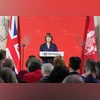
Treasury chief Rachel Reeves, the first woman to hold the post of Chancellor of the Exchequer, is set to tell lawmakers that more tax-raising measures are necessary (Photo: Bloomberg)
Following weeks of speculation, Britain's unpopular Labour government will deliver its second budget later Wednesday since it returned to power in a landslide election victory in July 2024 after 14 years in opposition.
Treasury chief Rachel Reeves, the first woman to hold the post of Chancellor of the Exchequer, is set to tell lawmakers that more tax-raising measures are necessary to plug a hole in the public finances.
Reeves said much the same at her first budget a little more than a year ago. That budget, she had insisted, would be the one and only big tax-raising budget in this parliamentary term, which is due to run to 2029.
Unfortunately for Reeves, the British economy, the world's sixth-largest, is not doing as well as she hoped, with many critics blaming her decision last year to slap taxes on business. Though there were signs that the economy was on the mend in the first half of the year when it was the fastest-growing among the Group of Seven leading industrial nations, it's faltered again.
The Chancellor faces a delicate balancing act of conveying fiscal stability while advancing the growth agenda, said Peter Arnold, chief economist at consulting firm EY UK.
False dawns have been a regular feature of the British economy since the global financial crisis of 2008-9. If the economy had kept growing at pre-crisis levels, it would be nearly a quarter bigger. That's a lot of lost activity and a lot of lost tax revenue going into the Treasury's coffers.
In addition to the long-term costs of the financial crisis, Britain's public finances have been further squeezed, like others, by the costs of the COVID-19 pandemic, the Russia-Ukraine war and US President Donald Trump's global tariffs. The UK bears the extra burden of Brexit, which has knocked billions off the economy since the country left the European Union in 2020.
Meanwhile, Reeves has a bunch of spending commitments, including making up for a series of about-turns on planned welfare cuts and the likely ditching of a cap on benefits paid out to children from larger families. She also wants to help out with the cost of living as inflation remains stubbornly high. Measures such as freezing rail fares, or cutting green taxes on energy bills, don't come cheap.
All in all, economists think that she will have to find something like 20-30 billion pounds (USD26-39 billion). With a manifesto-busting, but simple, increase in income tax seemingly ruled out despite weeks of frenzied speculation, Reeves will likely have to raise money from smaller, and more fiddly, taxes.
The main measure anticipated is a further freeze in the levels at which individuals pay Britain's different tax levels, meaning as wages rise more people fall into higher tax brackets. Other potential changes include a mansion tax on high-valued properties, changes to the capital tax regime and the generous provisions for private pensions.
(Only the headline and picture of this report may have been reworked by the Business Standard staff; the rest of the content is auto-generated from a syndicated feed.)

 "UK Treasury chief Reeves set to raise taxes again in her second budget")


