Berkshire Hathaway’s cash and treasury bill holdings soared past $300 billion in the third quarter of FY25, marking an all-time high, both in absolute terms and as a percentage of company assets since at least 1998, the Wall Street Journal said, quoting Dow Jones Market Data.
Holding significant cash reserves is not unusual for the conglomerate, but the scale of this buildup has drawn attention from market analysts.
Investors seek clues in Buffett’s annual letter
Observers are eagerly awaiting Warren Buffett’s annual letter to shareholders, set for release on Saturday, to gain insights into his market outlook and potential investment plans. The company’s annual report will reveal the precise cash position at the end of 2024.
“The issue is, what are they going to do with all this cash?" said Steven Check, chief investment officer of Check Capital Management, who has been following Berkshire for decades. “This is as extreme as I can recall."
Stock sales and market caution
Berkshire Hathaway generates cash from its diverse businesses — spanning insurance, railroads, utilities, and consumer goods — alongside its investment activities. Recently, however, the firm has leaned toward selling stocks rather than buying. For the past eight reported quarters, Berkshire was a net seller of equity securities, and filings indicate this trend continued into a ninth quarter, the news report said.
Because of Buffett’s legendary reputation, Berkshire’s investment moves are closely watched. When the firm scales back on equities, it can spark concerns about broader market conditions.
“I hear that from our advisers: Why should we be buying stocks if Warren Buffett’s not buying stocks?" said James Shanahan, senior equity research analyst at Edward Jones, the news report mentioned.
Waiting for the right opportunity
Market experts suggest that Buffett’s reluctance to deploy cash reflects high valuations rather than a negative market outlook. The S&P 500 has hit new highs in early 2025, climbing 4 per cent after consecutive years of strong gains. According to FactSet, the index recently traded at 22.4 times projected earnings, surpassing its 10-year average of 18.6, the WSJ reported.
Buffett himself addressed this issue at Berkshire’s annual meeting in May: “We’d love to spend it, but we won’t spend it unless we think we’re doing something that has very little risk and can make us a lot of money." He added, “We only swing at pitches we like. It isn’t like I’ve got a hunger strike or something like that going on. It’s just that things aren’t attractive."
With its massive cash reserves, Berkshire could acquire nearly any US company outside of the biggest giants. Based on its financial position, the firm has the capacity to buy companies such as Deere, United Parcel Service, or CVS Health outright.
Apple stock sales
One major reason for Berkshire’s rising cash pile has been its steady sale of Apple shares. The firm, which originally built its Apple stake between 2016 and 2018, has been trimming its holdings since late 2023. Over four consecutive quarters, its Apple stake was reduced from nearly 6 per cent to 2 per cent, though no further sales were recorded in the fourth quarter of 2024.
This strategy may also be part of Buffett’s long-term succession planning. Observers believe he is positioning the company for a smooth leadership transition when Greg Abel, his designated successor, takes over, the news report said.
“Some might say that this is housekeeping, that he’s cleaning everything up and getting ready to hand over the company," said Shanahan. “He would want to give Greg Abel a good starting point and not have any legacy problems."
Buybacks on pause, cash still generating returns
Another factor contributing to the cash buildup is the temporary halt in stock buybacks. For the first time in several years, Berkshire did not repurchase any shares in the third quarter. The company maintains that buybacks only occur when Buffett believes the stock is trading below its intrinsic value, provided its cash reserves remain above $30 billion.
Despite the cautious approach to investments, Berkshire’s cash is still working. In the first nine months of 2024, the company generated $8 billion in interest and investment income from its insurance operations, alongside $3.8 billion in dividend income, the news report said.
Confidence in Buffett’s strategy
While Berkshire has largely been a seller of stocks during the market’s strong rally — the S&P 500 has surged around 70 per cent since late 2022 — longtime investors remain patient. Many trust Buffett’s ability to deploy capital wisely rather than pushing for immediate action or a dividend payout.
“We own Berkshire to see the capital be reinvested," said Darren Pollock, portfolio manager at Cheviot Value Management. “We own it for the hope that the big whale will come along and they’ll be able to snare it. That just is taking a long time, obviously."

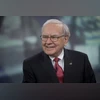 "Why Warren Buffett's cash pile is growing, and what it means for markets")

