


Mumbai: Between opportunity and despair
Sidharth Bhatia's excellently researched work throws light on several less-known aspects of Mumbai and brings to life the stories of numerous humble residents who are rarely heard or taken note of
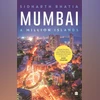 "Mumbai: A Million Islands")
premium
Mumbai: A Million Islands
5 min read Last Updated : Dec 30 2025 | 12:59 PM IST
Listen to This Article
Mumbai: A Million Islands
by Sidharth Bhatia Published by HarperCollins
302 pages ₹599
In the mosaic that constitutes India’s diverse, complex and intimidating landscape, Mumbai has always stood apart. At once a land of opportunity and hopelessness, an orderly, law-abiding space but also home to a mafia-type underworld, remarkably cosmopolitan but scarred by xenophobic communal and caste divisions and lethal violence.
Several commentators have been attempting to make sense of this contradictory city that provides a large part of India’s income tax returns, yet half of its population, possibly over six million, lives in slums. And despite its soul-numbing squalor, Mumbai attracts several thousand people every day who seek to eke out a living from its fetid streets and mountains of garbage to support themselves and families far away.
The distinguished journalist and long-term Mumbai resident, Sidharth Bhatia, has placed housing at the heart of the city’s failure — the inability of successive generations of political leaders and officials to provide decent accommodation for most of its residents, while pandering to the needs of a paltry group of affluent business persons and professionals who live in gated communities and remain cut off from the surrounding sordidness.
Mumbai, as is well known, emerged from the linking together of seven islands and, later, from the challenging reclamation schemes that added to its territory. Its original importance lay in its location that made it one of the greatest ports in the world, linking the commercial interests of East and West, bringing Western enterprise to India and taking Indian students, professionals, workers and entrepreneurs to pursue opportunities in West, North and South Asia.
Prospects for business and employment attracted hundreds of people from across India. Gujaratis, Sindhis, Bohris and Marwaris became promoters of major enterprises, primarily textile mills, which in turn brought in workers for these factories, as also the support systems that the burgeoning enterprises needed — in the construction, transport, food, and leisure sectors.
But from the very beginning, alongside the factories and upmarket housing for the affluent, were the slums. In 1910, a British urban planner noted that the working-classes had to live close to their place of work, but “have not the most elementary ideas of sanitation”. It was obvious even to the untutored that the city’s principal shortcomings are congestion and overcrowding, but high property prices have meant that most residents live in squalid conditions, with every plan for “development”, the author says, either not working or, at most, making only a marginal difference.
The book provides wonderful thumbnail sketches of Mumbai’s diverse areas — Colaba, Marine Drive, Dharavi, Dongri, Koyla Bunder, the former red-light area of Kamathipura — a mine of information even for Mumbai’s longstanding residents. These are embellished with pen-portraits of diverse personalities whose lives throw light on various aspects of Mumbai’s housing situation.
Thus, we meet Nainesh Thakkar, whose family for two generations has lived in makeshift accommodation on the terrace of a high-rise building; Nikhil Banker, who manages the accommodation of 3,400 tenant families in three buildings on Marine Drive; Bombil Aapa, who has lived in Dharavi, described as Asia’s biggest slum, for several decades and has witnessed the enterprise that flourishes in this grimy space; the intrepid transgender, Gauri Sawant, who has gained renown due to a popular advertisement; and Atika Chohan, who, as a single woman, struggles to find accommodation.
We also get to know former mill workers and union leaders who experienced the fall of the textile industry and the real estate bonanza that was reaped by politicians, developers and contractors. We shake hands with Kantibhai, a resident of Kamathipura who describes the changes in this formerly disreputable area.
And, finally, we meet Shanti Ravi of Koyla Bunder who shares with us the intricacies of the several hundred acres of land that belong to the Mumbai Port Trust but which are now home to thousands of families that have no legal status and simply do not exist. Realising the value of this illegally occupied land, politicians, officials and developers are salivating at the prospect of raising a Dubai in this wretched space.
Mr Bhatia ends Mumbai’s story by pointing out that the glitz and glamour of Mumbai’s skyline hides “the vast numbers of those who can’t afford this glossy version of the city they have lived in all their lives”; Mumbai’s rise as a great global centre is founded on deep human misery.
This is an excellently researched work that lucidly throws light on several less-known aspects of this great metropolis. Mumbai’s tale is brought to life through the stories of numerous humble residents who live at the margins of this urban achievement and are rarely heard or taken note of. Mr Bhatia engages with them with empathy and ensures they complete Mumbai’s narrative by asserting their place in its landscape. But the sense here is not of hope but despair.
The space that had once compelled India’s diverse mosaic to live and work together in harmony has now become deeply divided and violent. Perhaps, we could date this to the fierce state- and party-sponsored communal riots that had convulsed the city in the 1990s, when its partisan police force supported a xenophobic political party to wreak violence upon the Muslim community.
Those of us who recall the old city with deep nostalgia also mourn the loss of that unique reflection of cosmopolitan India.
The reviewer, a former diplomat, was a resident of Mumbai in his early years
Topics : Book Reviews Book BS Reads Reading Book reading