


Indian Politics and International Relations: Great power begins at home
How the evolution of India's political development is having an impact on its external projection
 "book review")
premium
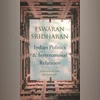
Indian Politics & International Relations: Underexplored Issues and Approaches
5 min read Last Updated : Jan 28 2026 | 10:28 PM IST
Listen to This Article
Indian Politics & International Relations: Underexplored Issues and Approaches
By Eswaran Sridharan
Published by Permanent Black
388 pages ₹1,200
There is no dearth of literature on the projection of India’s imminent rise in the 21st century. Beyond the familiar fair, Eswaran Sridharan, a much acclaimed political scientist, attempts a critical analysis of the under-explored shades of India’s rise. His current assignment as director and chief executive officer, University of Pennsylvania Institute for the Advanced Study of India, lends him a vantage of further deeper insights on the subject.
This collection of papers approaches the subject by analysing the evolution of India’s political development, which he sees as having an impact on its external projection. He presents, at the start, a factual perspective that the fragmentation of the Congress Party from the 1970s onwards led to the emergence of several political parties, both at the Centre and regional levels. He attributes these divisions primarily to the lack of inter-party democracy and the break in holding simultaneous elections at the Centre and states. In contrast, the author observes, the Bharatiya Janata Party (BJP) has a multilevel organisational structure from the village and district level, while at the state and national level inter-party elections take place regularly and leadership succession is usually decided by consensus and is uncontested.
The data used to analyse various trends in the country is somewhat dated but does help to highlight a few insightful trends. The economic reforms of 1991 are said to have unleashed a potent middle class that is ever-expanding in tune with India’s economic growth. The general outlook of this cohort seems to suggest greater inclination towards the BJP with high expectations. At the same time, identity politics based on region, language, religion and caste is on the rise, resulting in coalition-driven political arrangements. It is encouraging that political coalitions accommodate these diverse groups, including minorities, Dalits, tribals and so on. The growing polarisation of society as a consequence of communal politics is, however, a serious concern. The author’s suggestion of introducing “proportional representation” does not appear to be a feasible alternative, even with state guarantees, given the internal complexities of Indian society. Therefore, we should reconcile to the fact that coalition politics will remain central to Indian politics for much of the 21st century. The book draws attention to the common criticism that the international order for Third World countries is characterised more by hierarchy than anarchy, while their internal order is just the opposite. These informal hierarchical realities of power differentiation are said to constrain freedom of action and generate systemic pressures to modify behaviour in accordance with interests of the more powerful. This perspective is in sync with Mohammed Ayoob’s conceptualisation of subaltern realism in South Asia, drawing attention to how the neglect of the domestic variables in the nation-building process affect conflict and order. It is important to understand, according to Dr Eswaran, that the domestic processes have a strong bearing on bilateral relations in the sub-continent.
The author also draws attention to the India-Pakistan conflict by analysing scholarly viewpoints. He reasons that the two nuclear powers engaging in conflict actually detracts from their stature. India getting boxed in South Asia (minus China) diminishes its leverage in international fora, while Pakistan’s economic potential retards. John C Mathew III’s relative gains sensitivity theory that lays emphasis on the importance of absolute gains more than relative gains could be a useful barometer to assess each other’s gains in economic and security spheres. Mircea Maritza’s advocacy for both countries to undertake common economic projects and institutionalise a bilateral dialogue, not necessarily involving Kashmir, but ultimately leading to resolving it, is forward-looking. This view is in sync with Dale C Copeland’s theory of trade interdependence inducing peace and stability.
Dr Eswaran opines that India’s rise to Great Power status is a long way ahead, even though it commands significant clout on the global stage. In the Global South its extensive development assistance has earned it significant goodwill. Although India almost fits John J Mearsheimer’s definition of a Great Power — i.e enjoying relatively strong military, economy, industry, technology as well as geographical features such as size, resources and water bodies — the changing geopolitical shifts impose limitations on its rise. Resistance from the established hegemonic powers will be natural. India lacks status quo-altering capabilities; India’s military hardware is not indigenous; economically it is vulnerable to global supply chain disruptions in the absence of a strong manufacturing base. As a growing economy, India would need to take advantage of the vast opportunities that the big powers offer, which is that its diplomatic positions on international issues mostly remain nuanced. Dr Eswaran points out that India’s rise is taking place against the backdrop of a much faster rise of China. India’s strategy should be to narrow this gap through faster economic growth than that of China in the intervening period.
Dr Eswaran’s scholarly book concludes that in the foreseeable future India will be a leading power. However, among the several variables to which he alludes in the context of India’s rise to great power status, one is how it manages South Asia — whether it can be conflict-free and economically integrated on the lines of the European Union. Perhaps the universally acclaimed principle that the rise to greatness actually begins at home is also true for nations.
The reviewer is a retired foreign service officer. dammuravi@gmail.com