


Excel offers easy-to-use organic waste treatment system: Ashwin C Shroff
In this interview, Ashwin C Shroff, CMD, Excel Industries, elaborates on the need to treat organic waste and importance of decentralised waste management system
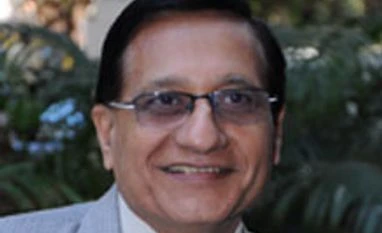)
Ashwin Shroff, CMD, Excel Industries
Excel Industries Ltd’s Environ-Biotech Division has been one of the pioneers of decentralised organic waste management treatment system in India. Its patented system rapidly processes organic waste into rich compost, thus reducing waste going to landfill. In this interaction with Rakesh Rao, Ashwin C Shroff, Chairman and Managing Director, Excel Industries Ltd, elaborates on the need to treat organic waste and importance of decentralised waste management system.
Why is it important to treat organic waste?
Organic waste if left untreated results in unhygienic living condition near the dumping sites and, at the same time, results in the release of harmful gases and methane (one of the greenhouse gases). Waste can either be a nuisance or a useful resource if you know how to use it.
Also Read

Please throw some light on kind of waste management technology offered by you
Excel has been involved in organic waste management for last 25 years. We offer technology which converts organic waste into compost by using microbes. We began our journey by offering technology to treat mixed garbage. As we operated these centralised plants, we realised that there was inherent problems (technical as well as operational) in treating mixed garbage. Issues such as segregation, delay in reaching garbage to treatment plants, transport inefficiencies, etc emerged requiring lots of resources and investment. We felt that these issues could be sorted if waste is treated near the source.
It is easy to segregate waste at the source, and once, organic waste is segregated treatment becomes easier. So we developed decentralised technology to treat organic waste near to the source. This technology is ideal for bulk waste generators such as hotels, restaurants, large housing complexes, industrial canteens, etc. The technology mimics natural composting process which converts organic waste into useful compost. The only difference is that with our technology it can be done in a short period of 10 days (compare to natural process which may take months).
How has been the response to your technology?
Since we launched our first decentralised technology, ie OWC, we have installed more than 800 machines across the country. But this is just a tip of the ice berg. Given the amount of waste being generated in the country, we see a huge demand for our machines. Our aim has been to offer cost-effective and easy-to-use technology which can be operated by anybody after minimum training. Fortunately, the solutions that we have developed are now getting due recognition.
Recently, Excel Industries’ Environ – Biotech Division launched an automatic single unit composting system, Bioneer. It is the next generation waste treatment technology, which can turn organic waste into compost in just 24 hours.
With appropriate policy support from the government to encourage people to use waste management technology, the market can witness a boom in the coming years.
What steps should be taken to solve the waste handling challenges?
It is important for the government to recognise that in addition to big, centralised solutions for waste treatment, decentralised systems can also play a big role in addressing the waste handling challenges.
In addition, following are some of the steps that need to be taken to make waste management strategy successful:
- Reducing cost of technology
- Educating people to segregate waste so that we can get valuable resources for recycling
- Providing proper equipment and training to rag pickers, since they will be at the front-end of the waste treatment strategy
- Giving waste treatment system a recognition of public utility infrastructure and providing incentives accordingly
- Using social media to create awareness about waste handling and treatment
- Having a national policy for waste management, which consistent across the country
While there is no magic pill for solving the waste problem, every smart city will have to look at a gamut of solutions to meet its waste handling challenge.
Don't miss the most important news and views of the day. Get them on our Telegram channel
First Published: Jun 25 2014 | 4:57 PM IST