


Tariff reset lifts India's medical device pulse amid China+1 shift
For Indian medical device exporters, the tariff reset addresses a long-standing vulnerability: wafer-thin margins
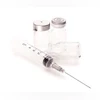 "Medical Device, Medical kits")
premium
India’s exports to the US are dominated by medical disposables — syringes, needles, intravenous administration sets, and basic accessories.
6 min read Last Updated : Feb 03 2026 | 10:56 PM IST
Listen to This Article
The sharp cut in US tariffs on Indian goods is proving to be a turning point for India’s healthcare manufacturing sector, with medical devices among the biggest beneficiaries. Industry executives say the move alters the competitive landscape just as global supply chains shift away from China, while also making it easier and cheaper for India to import advanced medical technologies from the US.
For Indian medical device exporters, the tariff reset addresses a long-standing vulnerability: wafer-thin margins.
India’s exports to the US are dominated by medical disposables — syringes, needles, intravenous administration sets, and basic accessories — categories where pricing power is limited, and even small cost shifts can decide tender outcomes. Export data shows these products already make up a sizeable part of India’s medical device shipments to the US, underscoring the segment’s sensitivity to tariff movements.
Rajiv Nath, chairman and managing director (MD) of Hindustan Syringes & Medical Devices, a leading disposable syringe manufacturer and forum coordinator of the Association of Indian Medical Device Industry (AiMeD), called the tariff cut a decisive turning point. “This is a game-changer,” Nath said, adding that the move sharply improves India’s position vis-à-vis Chinese suppliers, who continue to face significantly higher Section 301 duties on medical devices.
“The US tariff cut to 18 per cent on Indian goods gives Indian medical devices a competitive edge over Chinese counterparts, which face higher Section 301 tariffs, typically at 25 per cent, plus additional hikes on items like respirators. Previously, India endured higher duties while China had a relative advantage, but the new deal decisively tilts the balance in India’s favour amid China+1 diversification,” Nath said.
He added that this differential is already shaping buyer conversations, investment planning, and capacity utilisation decisions, while also strengthening India’s case as a reliable long-term supplier to the US healthcare system.
Pavan Choudary, chairman of the Medical Technology Association of India, which represents multinational device makers, said the tariff shift creates a rare dual advantage for India — lifting exports while improving access to advanced imports.
On the export side, he said that the tariff asymmetry is particularly impactful in low-margin categories. Chinese medical device exports to the US currently attract tariffs in the 30–34 per cent range, whereas Indian exports face around 18 per cent, creating a roughly 12 percentage point advantage.
“In such a margin-sensitive category, a 12 per cent tariff edge materially alters competitiveness. Currently, India accounts for around 10 per cent of the US disposables market, compared to China’s roughly 20 per cent. This tariff gap meaningfully strengthens Indian manufacturers’ relative position,” Choudary said.
Export trends underline why the US matters deeply to Indian manufacturers. Country-wise export data from AiMeD shows that the US has consistently been India’s largest destination for medical device exports, widening its lead over other major markets. India exported medical devices worth ~6,384 crore to the US in 2024-25, up steadily from ~3,890 crore in 2020-21.
Industry executives say the tariff cut could help India consolidate and expand this position, particularly as global buyers seek to derisk from China.
The agreement also carries implications for imports, especially high-value, technology-intensive medical equipment, where the US remains a dominant supplier to India. Import data shows India’s inbound shipments from the US are concentrated in advanced categories such as diagnostic reagents, surgical instruments, imaging equipment, robotic navigation solutions, and automated analysers. The US is one of India’s top sources of medical device imports overall, alongside China and Germany, with imports worth ~14,019 crore in 2024-25 (FY25).
“Any reduction in Customs duties directly lowers capital costs for hospitals, improving affordability,” Choudary said. “This is especially relevant for Tier-II and Tier-III cities, where price sensitivity is higher and adoption of advanced technology has historically lagged.”
He added that as these high-end technologies gradually move into domestic manufacturing, the initial cost relief from imports could accelerate scale-up and localisation, reinforcing India’s long-term medical technology ambitions.
While medical devices emerge as clear winners, the picture is more nuanced for pharmaceuticals and nutraceuticals.
Pharmaceuticals, particularly generics, remain largely insulated from tariff volatility. Manoj Mishra, partner and tax controversy management leader at Grant Thornton Bharat, said that generics fall outside the scope of reciprocal tariffs.
“Pharmaceuticals were excluded from reciprocal tariffs, with Section 232 duties applying mainly to branded and patented products, while generics remain exempt. As a result, India’s pharmaceutical exports — especially generics, which form the bulk of shipments to the US — remain largely unaffected, preserving pricing stability and supply continuity in India’s most important export market,” Mishra said, while cautioning that regulatory compliance and Food and Drug Administration approvals remain critical to long-term growth.
Indian pharma exports to the US stood at $10.52 billion in FY25, around 34 per cent of total drug exports of $30.38 billion, while exports to China remained marginal at $324.91 million. Although generics account for just 11 per cent of the US pharmaceutical market by value, they make up 90 per cent of prescriptions, with India supplying roughly 45 per cent of these volumes through low-cost, high-volume manufacturing at 25–30 per cent of US costs.
Namit Joshi, chairman of the Pharmaceuticals Export Promotion Council of India (Pharmexcil), told Business Standard that nothing materially changes for generic pharmaceuticals in the near term, though he cautioned that the US push for domestic manufacturing could create competitive pressure from China, Europe, or Mexico in the bulk drug space.
In contrast, nutraceuticals remain far more exposed to tariff uncertainty. Sanjaya Mariwala, executive chairman and MD of OmniActive Health Technologies, said the tariff reduction offers immediate operational relief but also revives long-standing policy concerns around product classification.
“With tariffs now at 18 per cent, cost pressures ease in a practical, day-to-day sense. Exporters retain some margin cushion, buyers feel more comfortable continuing orders, and production planning becomes less reactive to tariff uncertainty,” Mariwala said, adding that stability directly influences decisions on capacity utilisation and investment in higher-value products.
He said that, unlike pharmaceuticals, nutraceuticals are often classified as general food items rather than healthcare-linked products, exposing them to higher duty risks and commercial uncertainty. Previously, companies like OmniActive even explored shifting part of their manufacturing footprint to the US as a defensive response to tariff pressures. The tariff reset reduces the urgency of such strategies and allows exporters to rethink India-based expansion with greater confidence.
Industry participants say nutraceutical exporters have been operating under acute stress, with US customers cutting inventories, delaying launches, and pushing for faster — and costlier — logistics solutions.
Taken together, the tariff reduction redraws the competitive map across healthcare segments. Industry executives say the deal marks not just a tariff change but a reset in long-term strategic calculations.