


'Upward trend' in ties with China, says Ajit Doval in talks with Wang Yi
NSA Ajit Doval's remarks come at a time when Chinese Foreign Minister Wang Yi is on a two-day visit to India, making his first visit to India in three years
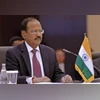 "Ajit Doval")
The talks between Doval and Wang Yi come ahead of PM Modi's visit to China for the Shanghai Cooperation Organisation Summit | Photo: Bloomberg
Listen to This Article
National Security Advisor (NSA) Ajit Doval, on Tuesday, in his opening remarks during talks with Chinese Foreign Minister Wang Yi, said that ties with Beijing are on an "upward trend".
Highlighting peace along the borders, Doval noted, "I'm very happy that since then, in the last 9 months, there has been an upwards trend. Borders have been quiet. There has been peace and tranquillity. Our bilateral engagements have been more substantial", news agency ANI reported.
Doval's remarks come at a time when Chinese Foreign Minister Wang Yi is on a two-day visit to India, making his first visit to India in three years.
Echoing the same sentiment as Doval's, in a meeting with External Affairs Minister S Jaishankar, Wang Yi, on Monday, said that the ties between the two countries are showing a positive trend towards returning to cooperation. Speaking to Jaishankar, Wang Yi also stressed that the two countries should view each other as partners and not rivals.
Also Read

 "Wang Yi")
 "Wang Yi, Wang, Chinese Foreign Minister")
 "NSA Ajit Doval with Denis Manturov")
 "Vladimir Putin, Putin")
Underlining the role played by PM Modi and Xi Jinping in giving a boost to move ahead since their talks in Kazan 2024, Doval noted, "The new environment that has been created has helped us in moving ahead in the various areas that we were working."
The talks between Doval and Wang Yi come ahead of PM Modi's visit to China for the Shanghai Cooperation Organisation Summit.
India-China ties
The ties between the two Asian neighbours deteriorated after the deadly Galwan clash of 2020 along the Line of Actual Control. However, recently, the two neighbours have pushed forward to mend ties, with New Delhi reinstating tourist visas for Chinese nationals and Beijing loosening curbs on urea exports.
Earlier today, a report in The Economic Times suggested that China has reportedly assured India of supplies of fertiliser, rare earth minerals, and tunnel-boring machines.
The mending in ties between India and China also comes at a time when the US has imposed 50 per cent tariffs on India. While the 25 per cent tariffs were imposed as the negotiations under the proposed Bilateral Trade Agreement stalled, another 25 per cent was imposed as "secondary sanctions" for purchasing Russian energy at a time when the US President Donald Trump is trying to broker a ceasefire deal between Russia and Ukraine.
More From This Section
 "Chinese soldiers, China military")
 "Taiwan flag, Taiwan")
 "Donald Trump, Trump")
 "Former Army COAS General Manoj Mukund Naravane")
 "Spear Corps Commander Lt Gen Abhijit S Pendharkar (second from right) witnessed Ex drone Prahar — an exercise that validated the integration of drone technology into tactical operations (Photo: @Spearcorps/x)")
Topics : Ajit Doval Narendra Modi India China relations S Jaishankar Wang Yi Xi Jinping SCO summit BS Web Reports
Don't miss the most important news and views of the day. Get them on our Telegram channel
First Published: Aug 19 2025 | 2:43 PM IST