


India likely underreporting heat-related deaths: WHO's ex-chief scientist
Soumya Swaminathan says fatalities just 'tip of iceberg', heat wave affecting people economically, mentally
 "High temperatures")
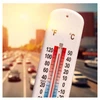
More than 80 per cent of India’s population is now exposed to climate-related health risks. | Image: Shutterstock
Listen to This Article
Highlighting lack of availability of robust data, former World Health Organization (WHO) chief scientist and health ministry advisor Soumya Swaminathan on Saturday said India most likely underreporting heat-related deaths.
Speaking at The Energy and Resources Institute (Teri’s) World Sustainable Development Summit, Swaminathan said that accurate records of heat-related deaths are lacking in India, necessitating estimations and modeling.
Citing several scientific studies tracking excess deaths, she added that heat waves contribute to significant mortality spikes.
“Practically everyone in India is now vulnerable to climate change impacts, from extreme heat to vector-borne diseases. Addressing this requires close cooperation.” Swaminathan said.
More than 80 per cent of India’s population is now exposed to climate-related health risks, ranging from respiratory diseases to malnutrition caused by disrupted agriculture.
Also Read

 "Fog, New Delhi Fog, Winter, Delhi Fog")
 "The devastation of the Palisades Fire is seen at sunset in the Pacific Palisades neighborhood of Los Angeles")
 "fire, Structures burn during the Eaton Fire in Altadena, California")
 "heat global warming weather")
Last summer, India had recorded 536 heatwave days, the highest in 14 years, according to the India Meteorological Department (IMD).
Official data shows that India recorded 41,789 suspected heat stroke cases and 143 heat-related deaths during one of its longest heat waves in over a decade.
She added that while the health ministry has introduced heat-related death surveillance with above normal temperatures expected again this year, fatalities are just the tip of the iceberg.
“Many more people suffer from conditions worsened by extreme heat, including high blood pressure, heart disease, and heat exhaustion, leading to productivity and economic losses,” she said.
Beyond physical health, she added that prolonged heat exposure can also have an impact on mental health. She linked it to increased suicides, worsening psychiatric conditions, and a rise in domestic violence.
“There is a need for measures to ensure both survival and thermal comfort to protect public health and well being,” she added.
More From This Section
 "pharma")
 "Covid-like symptoms")
 "Doctor, Medical, Health care")
 "Doctor, Medical, Health care")
 "Doctor, Medical, Health care")
Topics : Heatwaves WHO India Meteorological Department
Don't miss the most important news and views of the day. Get them on our Telegram channel
First Published: Mar 08 2025 | 6:39 PM IST