


Home / India News / Hisar advocate to Chief Justice of India: The making of Justice Surya Kant
Hisar advocate to Chief Justice of India: The making of Justice Surya Kant
Justice Surya Kant is set to become the first person from Haryana to occupy India's highest judicial post on Monday. Bhavini Mishra takes a look at his journey
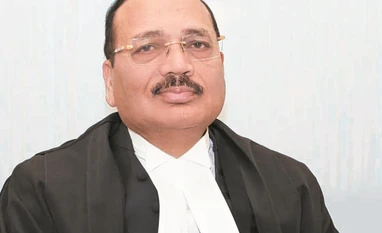 "Justice Surya Kant")
premium
Justice Surya Kant | File Image
6 min read Last Updated : Nov 24 2025 | 12:05 AM IST
Listen to This Article
The story of Justice Surya Kant, who is set to become the 53rd Chief Justice of India (CJI) on November 24, mirrors that of the nation itself: It begins in a village, and despite hardships, culminates in triumph through grit, determination, and hard work.
Born on February 10, 1962 in Petwar, a village in Haryana’s Hisar district, Justice Kant’s early years and schooling were spent amid scarce resources, characterised by the faint glow of kerosene lamps. His father, a Sanskrit teacher, instilled in him the discipline that would eventually lead him to the highest seat of justice in the country.
After earning a Bachelor of Legislative Law (LLB) degree from Rohtak’s Maharshi Dayanand University in 1984, Justice Kant began practising law at the Hisar district court the same year. Within a year, he shifted his practice to the Punjab and Haryana High Court (HC), where his articulate arguments and grasp of service and constitutional law earned him early recognition.
A steady climb
Justice Kant’s rise was methodical, not meteoric.
Nearly a decade and a half after he started practising law, Justice Kant was appointed the Advocate General of Haryana in 2000. At the time, he was the youngest to hold that office and was known among his peers for his clear-headed legal opinions and pragmatic approach.
Four years later, he was elevated to the Punjab and Haryana HC bench, marking the start of a judicial career that would combine doctrinal depth with administrative pragmatism. His rulings reflected a concern for equity and accountability in governance.
His tenure as the Chief Justice of the Himachal Pradesh HC (2018–2019) was distinguished by the introduction of e-courts, virtual filing systems, and digital libraries — initiatives aimed at expanding access to justice in regions where physical access to courts is often tricky.
His administrative efficiency caught the attention of the Collegium, paving the way for his elevation to the Supreme Court in May 2019.
The judge and his jurisprudence
In the last six years, Justice Kant has authored or co-authored over 50 Supreme Court judgments across diverse domains: From constitutional questions to environmental and criminal law. Known for clarity of expression and meticulous reasoning, he has often sought balance between institutional integrity and pragmatic justice.
In the Aligarh Muslim University minority status case, he offered a nuanced dissent, arguing for doctrinal clarity over judicial overruling. In another matter concerning electoral rolls in Bihar, he pressed for transparency in the Election Commission’s processes, directing it to disclose data on millions of voters excluded from draft lists. His opinions, colleagues note, are marked less by rhetoric and more by a focus on implementation and accountability.
Justice Kant has also been vocal on the judiciary’s evolving role. He has repeatedly urged HCs to “grow like modern hospitals, ready for emergencies” and ensure their writ jurisdiction under Article 226 serves citizens swiftly and effectively.
A frequent speaker at law schools, he tells young lawyers to “stay curious and never stop learning,” citing a personal anecdote about an early-career case he lost due to overconfidence. That episode, he said, shaped his methodical judicial style.
The Chief Justice-in-waiting
When he takes over from the incumbent CJI Justice B R Gavai, Justice Kant will be the first person from Haryana to occupy the post.
His tenure extends till February 2027, giving him nearly 15 months to make a mark. His priorities are already clear: Tackling case backlogs, institutionalising mediation and alternate dispute resolution, and modernising legal aid systems.
In his public remarks as CJI-designate, he has emphasised that “access to justice is not a slogan but a service.” Justice Kant has also said that courts must adapt to the “new frontiers of digital exclusion, migration, and climate displacement.”
Speaking to mediapersons on November 22, Justice Kant said: “My first and foremost challenge is the arrears of cases. Today’s scoreboard shows that the Supreme Court arrears crossed 90,000. I am not going into how it happened, who is responsible... maybe listing (of cases) has gone up.
Those who have worked with him describe him as reform-minded yet measured, a “listener” who prefers building consensus over confrontation.
Focus on pendency and mediation
Reflecting on his appointment, former Supreme Court judge Justice Sanjay Kishan Kaul said the new CJI should prioritise older matters to reduce pendency meaningfully. “Maybe judges could dedicate one day per week to spend time on old cases,” he suggested, adding that artificial intelligence (AI) could help dispose of motor accident claim cases efficiently.
Justice Kaul recalled Justice Kant’s administrative skills from his days at the Punjab and Haryana HC, saying these would “come in very handy” as he takes over the top judicial office.
Another former Supreme Court judge, Justice A S Oka, noted that Justice Kant’s relatively longer tenure compared to his immediate predecessors would also mean heightened expectations.
He expressed confidence that the new CJI would maintain judicial independence and enhance transparency in appointments, while also calling for reforms in the Supreme Court’s “CJI-centric” roster system to make case allocation more structured and equitable.
Senior Advocate Anjana Prakash said she hoped Justice Kant would adopt a democratic approach to administration by consulting all Supreme Court judges, not just a select few. “He seems to have a rational approach with an ear to the ground,” she observed, suggesting that constitutional matters be assigned through a fair rotation to ensure every judge’s participation.
Senior Advocate Sachit Jolly noted that Justice Kant has long viewed mediation as “more than just a tool of alternative dispute resolution, but a constitutional value.” He hoped the new CJI would persuade governments to adopt compulsory mediation before filing commercial suits, given that they remain the largest litigator.
“Slightly ambitious,” Jolly added, “but pre-litigation mediation in tax matters could also be considered since that forms a sizable chunk of government litigation.”
Topics : chief justices of India Supreme Court Haryana