


Veteran journalist Mark Tully dies at 90: Early career, key achievements
Mark Tully, also known as Sir William Mark Tully, was one of the most respected foreign journalists to cover India
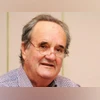 "Mark Tully")
During his long career, Tully reported on many defining moments in India’s post-Independence history.
Listen to This Article
Veteran journalist, author and broadcaster Mark Tully passed away at a private hospital in Delhi on Sunday at the age of 90. Hospital authorities said he died due to multi-organ failure following a stroke.
Known as India's voice to the world, Tully's journey was remarkable. Let's take a look at who he was, his early life and some of his best works.
Who was Mark Tully
Mark Tully, also known as Sir William Mark Tully, was one of the most respected foreign journalists to cover India. Born in Calcutta (now Kolkata) in 1935, during the British Raj, India remained his home for most of his life. He spent decades reporting from the country and became widely known as the BBC’s “voice of India”.
Tully joined the BBC in the 1960s and was posted to India in 1965. Over time, he grew from an administrative role into one of the broadcaster’s most prominent correspondents. He later served as the BBC’s New Delhi bureau chief for 22 years, leading coverage not only from India but also across South Asia.
Also Read

 "senior citizens, elderly")
 "Unified Payments Interface, UPI, UPI Payment")
 "ai, artificial intelligence")
 "H1B visa")
 "Xi Jinping, Jinping, China President")
Major events Tully covered
During his long career, Tully reported on many defining moments in India’s post-Independence history. These included the 1971 Bangladesh war, the Emergency between 1975 and 1977, Operation Blue Star, the assassination of Indira Gandhi and the anti-Sikh riots of 1984, the assassination of Rajiv Gandhi in 1991, and the demolition of the Babri Masjid in 1992. He also covered the Bhopal gas tragedy and major political upheavals in the region.
Tully resigned from the BBC in the mid-1990s after differences with the organisation’s leadership. However, he continued to broadcast and write, including presenting the BBC Radio 4 programme Something Understood. He remained engaged with issues of faith, society and Indian politics well into his later years.
According to the BBC, Tully helped introduce India to global audiences with depth, empathy and understanding. His reporting combined ground-level detail with a strong commitment to secularism and pluralism. Even late in life, he described himself as belonging to both India and Britain.
Apart from broadcast journalism, Tully was a prolific writer. He authored several well-known books on India, including No Full Stops in India, India in Slow Motion, and The Heart of India. His first book, Amritsar: Mrs Gandhi’s Last Battle, co-written with journalist Satish Jacob, focused on Operation Blue Star and the Punjab issue.
Tully's connection with India
Tully was deeply connected to India beyond his professional role. Fluent in Hindi, he earned wide respect and affection and was popularly known as “Tully sahib”. He travelled extensively across the country, often by train, and was known for giving voice to ordinary Indians as well as political leaders. He lived simply in South Delhi and considered India his true home.
Honours and recognition
Tully received several honours for his work. He was knighted by the British government in 2002 for services to journalism. India also honoured him with the Padma Shri and the Padma Bhushan, making him one of the few foreign nationals to receive such recognition.
More From This Section
 "republic day")
 "Indian Flag, India")
 "Rahul Gandhi, Rahul, Priyanka Gandhi")
 "Republic Day rehearsal, Republic Day")
 "Delhi Winter, New Delhi Winter, Winter, Cold, Smog, Delhi Pollution, Delhi Air Quality, Pollution")
Don't miss the most important news and views of the day. Get them on our Telegram channel
First Published: Jan 26 2026 | 12:46 PM IST