“In Rajasthan — a state that has grappled with water scarcity for centuries — the government has embarked on a mission to transform the region into a technology-driven, leading agricultural powerhouse by significantly expanding irrigation facilities,” the official said.
Extensive development work is currently underway to upgrade irrigation infrastructure, he added.
Concurrently, efforts are being made to integrate modern technology into agriculture and enhance the processing and marketing of agricultural produce.
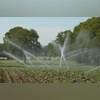
Currently, micro-irrigation facilities cover 24 per cent of the state’s gross sown area (GSA). There are plans to expand coverage to 51 per cent by 2030.
Under this initiative, micro-irrigation systems will be installed across 300,000 hectares of land. The project, worth ₹1,340 crore, is expected to benefit 300,000 farmers.
Furthermore, various projects worth around ₹11,000 crore will be undertaken in the next 4-5 years to further improve irrigation facilities throughout the state.
To promote the use of solar energy in agriculture, 50,000 solar pump sets will be installed across the state, costing ₹1,500 crore.
To facilitate the utilisation of harvested rainwater, subsidies worth ₹585 crore will be provided for the construction of 8,000 diggis (water tanks) and 15,000 kilometres of pipelines in the next few years, as well as for the creation of 36,000 farm ponds over the next two years.
This initiative is projected to benefit more than 80,000 farmers.
The state government is committed to uplifting farmers and making them self-reliant. In this regard, he said the government continuously makes efforts to empower farmers — especially women, Scheduled Caste, and Scheduled Tribe farmers, through various schemes.
He stated the state government is continuously working to increase farmers’ income and encourage agricultural production.
Agriculture and allied sectors contribute around 27 per cent to the state’s gross domestic product (GDP). The government plans to increase it by launching new agri-related schemes.


 "Irrigation")