


Inside India's new wedding wonderland: Couples reinvent the big day
From wine-reading stations to Interstellar sangeets, couples are reimagining their big day to make it personalised, immersive
 "wedding, Indian wedding, marriage (Photos: Shreem Events and Momente Weddings)")
premium
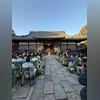
An Indian wedding in Kyoto, which saw personalised kimonos, traditional geisha, and maiko dances. (Photos: Shreem Events and Momente Weddings)
8 min read Last Updated : Dec 05 2025 | 10:23 PM IST
Listen to This Article
At a recent wedding, guests encountered an unexpected invitation: To look into their future, literally. Each person was asked to spill wine across a canvas.
The patterns created by the spills were then interpreted by a fortune-teller practising oenomancy, a form of divination that studies wine in the way tasseography reads tea leaves. What might have been a traditional cocktail hour instead became a moment of curiosity, conversation, and personalised insight, woven seamlessly into the couple’s vision for a memorable day.
At another celebration, the sangeet was transformed into a cosmic experience inspired by Interstellar, Christopher Nolan’s 2014 sci-fi epic. Guests walked through an entrance crafted to resemble the interior of a spaceship and stepped into a world filled with astronaut figurines, moon balls, and intergalactic flourishes. It was an immersive recreation of the film’s speculative universe wherein a group of astronauts sets out to look for a new home for humankind.
These weddings are only two examples of how couples today are reshaping long-held ideas of grandeur and celebration. The pursuit is no longer only about scale but increasingly about distinction, about creating weddings that say something about the couple, their memories, their tastes, and even their sense of fun.
Over the decades, Indian weddings have continually expanded in scope and ambition, in part fuelled by the cinematic imagination of post-liberalisation Bollywood. Films such as Hum Aapke Hain Koun..! (1994) and Dilwale Dulhania Le Jayenge (1995) cemented the idea of multi-event festivities, choreographed functions, and exuberant decor. The visual vocabulary of weddings changed, and with it came a cultural shift: The idea that a celebration could, and should, be both elaborate and emotionally resonant.
Today, the challenge many couples face is how to stand apart in a landscape where large weddings are already the norm. The answer, wedding planners say, lies in combining the spectacular with the personal, and in curating experiences that make even the most familiar rituals feel distinctive.
A wine-reading station
A Kyoto wedding
For Devanshi Patel, founder of the Mumbai-based bespoke wedding and event planning venture Shreem Events, the shift toward personalisation recently unfolded on a global stage. Patel returned from Kyoto, Japan, after organising a three-day wedding for a couple who wanted to celebrate in the city where some of their fondest memories were made. With 135 guests in attendance, it was an opportunity to introduce invitees to a destination that held deep significance for the bride and groom.
Japanese tradition shone through in the most beautiful way, Patel says. Ninja calligraphy counters allowed guests to interact with an artisan skill, while matcha-making stations captured an intimate, everyday ritual of Japanese culture. Traditional geisha and maiko dancers added a touch of heritage to the festivities. The ceremony itself was held in Buddhist fashion at the holy Ninna-ji Temple, a Unesco World Heritage site in Kyoto.
The celebrations continued with a cocktail hour and an afterparty for which the dress code was personalised kimonos, gifted to every guest. Patel says the experience of planning in Japan — a first for her — brought its own challenges and fascinations. “The Japanese are a stickler for timings and very disciplined,” she says. “It was a very different experience for us.”
This difference extended to logistics. Because the guests were largely international travellers, keen on exploring the city and reaching the destination on their own, the planning team did not need to arrange pickups or drop-offs, an unusual departure from the norm in Indian weddings. That freed the team to focus on the experience itself.
Among the most memorable details was a miniature 7-Eleven created within the hotel. It was stocked with chocolate-filled pandas, beer, chips, and even Japanese medicines offered as shots. It was a playful nod to an iconic part of Japanese everyday life.
“Luxury today is not about money, but about time,” Patel says. She plans no more than eight weddings per year, dedicating close to six months to each to ensure the smallest details are accounted for.
The business of the spectacle
The appetite for such weddings is rapidly growing. Just last month, social media was flooded with glimpses from a non-resident Indian (NRI) wedding in Udaipur, Rajasthan, where Jennifer Lopez performed and filmmaker Karan Johar hosted a special segment, in Koffee With Karan style. The couple — Vamsi Gadiraju and Netra Mantena, daughter of Orlando-based businessman Rama Raju Mantena, the CEO of Ingenus Pharmaceuticals — became a case study in how globalised and entertainment-driven Indian weddings have become.
According to a 2024 report by brokerage Jefferies, India’s wedding industry is valued at around $130 billion, second only to China’s ($170 billion). On average, an Indian wedding costs ₹12 lakh (roughly $15,000), sometimes more than what a family spends on 18 years of a child’s education. But for luxury weddings, says Parthip Thyagarajan, cofounder and CEO of WeddingSutra, a bridal media brand, budgets range from ₹3 crore to ₹30 crore, excluding clothes, jewellery, and gifts.
“It’s not just a wedding, it’s a spectacle,” Thyagarajan says. Destination weddings especially intensify the expenditure. Among high-net-worth and ultra-high-net-worth business families, a wedding can resemble a corporate spending exercise.
Darshan Shroff, partner at Momente Weddings, a Mumbai-based luxury wedding planner founded in 2010, agrees. “It’s a black hole and there’s no end to the amount of money one can spend,” he says. Even an “average” luxury wedding, he adds, now entails spending of over ₹3 crore.
An Interstellar-themed sangeet in Udaipur
The personal touch
Yet the dynamics are changing. As a younger generation begins to marry, the emphasis is shifting away from just large sets and dramatic backdrops towards meaningful details.
“Couples want big weddings, but they also want to be very involved,” says Shroff. Small, symbolic touches matter more than sheer scale. At one wedding, his team created a Parisian-themed welcome lunch inspired by the bride’s time studying in Paris, complete with pastel hues, macarons, keys tied to locks, and French bicycles. The sangeet, in contrast, leaned fully into the Interstellar theme, creating an interplay of personal nostalgia and high-concept design.
Hyderabad-based Priya Maganti, the cofounder of RVR Eventz & Design, sees a similar shift. Known for planning badminton player PV Sindhu and Venkata Datta’s wedding, Maganti says couples today want their stories woven into the events. “Gone are the days of wedding photoshoots or videos. Now a couple’s story is reflected through curated menus, cocktails, and blurbs, sharing nuggets of their journey, across venues,” she says.
Engagement is a key demand. Guests are no longer expected to simply witness; they are invited to participate.
Perfume bars, where guests blend essential oils to create personalised scents, and ubtan (turmeric-chickpea paste) stations for custom body and face scrubs are now common. Patel says mentalists and astrologers, particularly for wine-reading sessions, remain perpetual favourites. These interactions leave guests with personalised memories, she says, which become part of the wedding’s lingering impact.
Bringing the destination home
According to Thyagarajan, not every couple chooses to travel for a destination wedding anymore. For many, convenience is paramount, especially when elaborate wardrobes and multiple events stretch over several days. Increasingly, couples create “destination-inspired” weddings within their own cities while booking out entire hotels for guests, he says.
Maganti recalls a Hyderabad wedding where 3,000 guests were transported into a reimagined Jaipur created in the city’s emerging tech hub. Faux jharokhas, glass chandeliers, painted columns, and a magnificent dome embedded with 1,000 shimmering stones recreated the grandeur of the Pink City — despite a rain red alert.
A wider wedding ecosystem
Thyagarajan says that today’s weddings involve an expanded set of vendors: From stylists and entertainers to food specialists, decor artistes, and logistics coordinators. The dependence on metros for these is dropping.
Traditional wedding destinations such as Jaisalmer and Pushkar in Rajasthan, and Mahabalipuram in Tamil Nadu are evolving too, developing their own ecosystems of planners and decorators, he says.
Meanwhile, international destinations like West Asia, Thailand, and Sri Lanka retain strong appeal for Indian couples, offering scenic backdrops, familiar Indian cuisine, and flexible catering rules.
As for wedding catering, here, too, the move is towards premiumisation. “We have started doing live boulangerie stations for guests, with fresh French pasties, croissants, croffles and tarts,” says Abhishek Ahuja, director, Cream of the Crop, a Delhi-based bespoke caterer.
Spectacles of personalisation
- Experiential add-ons include mentalists, astrologers, oenomancy sessions, scent-making bars, DIY beauty counters
- Focus on personalised storytelling through menus, cocktails, decor, and installations reflecting the couple’s journey
- Destination-inspired city weddings, where entire hotels or convention centres are sometimes turned into replicas of a city
- Global artistes, themed entertainment, and traditional elements from the chosen country add international flair
- The emphasis on detail-driven luxury means fewer weddings per planner, longer timelines
Topics : Indian weddings Weddings Marriage