Notably, the political situation is not dissimilar to the summer five years ago. A year before the 2019 Lok Sabha polls, the BJP lost the Gorakhpur and Phulpur Lok Sabha bypolls in Uttar Pradesh, considered its strongholds, to a somewhat united Opposition. In May that year, a phalanx of Opposition leaders shared the stage in Bengaluru to inaugurate the H D Kumaraswamy-led coalition government of the Janata Dal (Secular) and the Congress, which had denied the BJP a shot at power in Karnataka. Later, on the back of complaints of agrarian distress, the Congress worsted the BJP in three Hindi heartland states — Madhya Pradesh, Chhattisgarh, and Rajasthan — in December. In its interim Budget in February, the government announced the PM Kisan scheme to assuage farmers, and reached out to the middle class.
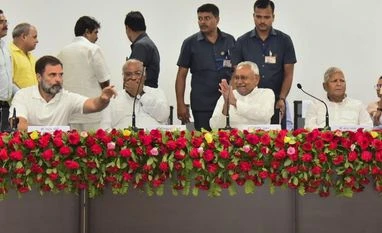
However, there are also crucial differences, beyond the obvious, such as Opposition unity efforts burying the idea of a “third front”, between then and now. Unlike five years ago, the Opposition has more cohesive alliances in states such as Maharashtra and Bihar, which together have 88 seats. With Congress leader Rahul Gandhi conveying he is not going to be the face of his party’s campaign, unlike 2019, the Congress is willing to accommodate regional parties. And, most crucially, according to the recent Lokniti-CSDS survey data, people are significantly more upset about inflation and unemployment than they were five years ago. The survey also reported that while Mr Modi remains the most popular national leader by some distance, his popularity ratings have plateaued. It would thus be interesting to see if Mr Modi’s recent US visit, the hosting of the G20, the inauguration of the Ram temple in Ayodhya in January, and the expansion of welfare schemes shore up his ratings, or if the Opposition succeeds in converting 2024 into an election focused on livelihood issues.
Much depends on how the Congress deals with its contradictions with the Samajwadi Party in UP, Trinamool Congress in West Bengal, and Aam Aadmi Party in Punjab and Delhi. It would need to perform creditably in the December Assembly polls and its bipolar contests with the BJP in 150 Lok Sabha seats in northern and western India if the Opposition has to make a meaningful dent. The BJP has also taken to reinvigorating the National Democratic Alliance, reaching out to former and potential allies, such as the Telugu Desam Party. The game is afoot.


 "oppn, politics")