Beyond funding, the redesign makes the programme citizen-centric and utility-based. Among the changes is a proposed uniform national digital framework, “Sujalam Bharat”, which will assign every village a unique service-area identity document, or ID, and map the supply of drinking water — from source to tap. This unified monitoring system is expected to improve transparency and service tracking. Greater accountability is expected through stronger roles for gram panchayats and village committees on water and sanitation to ensure adequate in-village operation and maintenance mechanisms for “Har Ghar Jal”, while initiatives such as “Jal Utsav” seek to deepen community participation in reviewing water systems in villages and reinforcing collective responsibility for drinking water.
The first phase of the mission prioritised a rapid expansion in the number of tap connections, but the durability of service remains uneven. Independent assessments and field reports suggest that several villages continue to experience irregular water supply, limited treatment capacity, or poorly maintained infrastructure. Operation and maintenance, which is often the weakest link in rural infrastructure programmes, continues to depend heavily on the technical capacity and financial resources of local institutions. Expenditure trends also reveal the uneven pace of implementation. The 2025-26 Budget estimate for Jal Jeevan was ₹67,000 crore, but revised spending is ₹17,000 crore. And for 2026-27 again, the allocation under the Budget estimate is ₹67,670 crore. Expenditure in 2024-25 stood at approximately ₹22,615 crore. These figures suggest that implementation bottlenecks, procurement delays, and capacity constraints have slowed the pace at which allocated funds can be utilised. In this context, the revival and restructuring of the programme could be seen as an opportunity to address earlier administrative and operational challenges so that public funds are deployed more efficiently.
An equally important concern relates to water sustainability. India is among the world’s most water-stressed countries, with many regions facing declining groundwater levels and deteriorating quality. Groundwater remains central to rural water supply. Studies indicate that groundwater sources take care of over 85 per cent of drinking-water demand in rural India and meet more than 60 per cent of irrigation needs. In water-scarce regions, increased reliance on groundwater could undermine long-term water security unless managed through parallel investment in aquifer recharge, watershed development, rainwater harvesting, and alternative surface-water sources. Addressing these concerns through efficient use of funds could make the mission pivotal in advancing the “Sustainable Development Goal 6.1” of ensuring universal access to safe and affordable drinking water for all by 2030, along with strengthening India’s long-term water security in rural areas.


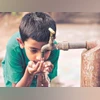 "Jal Jeevan Mission")