


Japan's Ishiba to decide on resignation after studying US tariff deal
Ishiba had announced his intention Monday to stay on to tackle pressing challenges, including tariff talks with the US
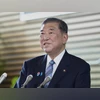 "Shigeru Ishiba")
Japanese Prime Minister Shigeru Ishiba speaks to the media regarding the Japan-U.S. trade framework at the prime minister's office in Tokyo, Japan, Wednesday, July 23, 2025. (Photo: PTI)
Listen to This Article
Japanese Prime Minister Shigeru Ishiba said he will make a decision on resigning over a historic defeat of his ruling party in a weekend election after closely studying the tariff deal just struck with the United States.
Ishiba has been under growing pressure to step down as his ruling Liberal Democratic Party and its junior coalition partner, Komeito, lost their majority in the 248-member upper house, the smaller and less powerful of Japan's two-chamber parliament on Sunday, shaking his grip on power and Japan's political stability.
The loss means Ishiba's ruling coalition, which also lost a majority in the more powerful lower house in October, now lacks a majority in both houses of parliament, making it even more difficult for his government to achieve any policy goals and worsening Japan's political instability.
Ishiba had announced his intention Monday to stay on to tackle pressing challenges, including tariff talks with the US, without creating a political vacuum, sparking calls from inside and outside his own party for a quick resignation to respond to the election results.
With the tariff deal with the US paving the way for his possible departure, Japanese media said he is expected to soon announce plans to step down in August.
Also Read

 "Amid policy movements on India's lofty shipbuilding targets, the Ministry of Ports, Shipping and Waterways (ShipMin) on Friday deliberated with coastal states during the 20th Maritime State Development Council (MSDC) meeting on the possibility of est")
 "Donald Trump, Trump")
 "Asian stcks, asian shares, share market")
 "Shigeru Ishiba, Shigeru, Ishiba")
 "airport, tourists, passengers")
Ishiba welcomed the trade agreement Wednesday, which places a 15% tax on Japanese cars and other goods imported into the US from Japan, down from the initial 25%, saying it was a product of tough negotiations to protect the national interest and that it would help benefit both sides as they work together to create more jobs and investment.
But Ishiba declined to comment on his possible move and only told reporters that he has to closely examine the trade deal first.
In Sunday's election, voters frustrated with price increases exceeding the pace of wage hikes, especially younger people who have long felt ignored by the ruling government's focus on senior voters, rapidly turned to emerging conservative and rightwing populist parties, like the Democratic Party for the People and Sanseito.
None of the opposition parties have shown interest in forming a full-fledged alliance with the governing coalition but they have said they are open to cooperating on policy.
(Only the headline and picture of this report may have been reworked by the Business Standard staff; the rest of the content is auto-generated from a syndicated feed.)
More From This Section
 "Australia's Adelaide")
 "Plane Crash, South Korea Plane Crash, Muan Plane Crash")
 "Richard Grenell")
 "Microsoft logo, Microsoft")
 "Jerome Powell and Donald Trump, Powell, Trump")
Don't miss the most important news and views of the day. Get them on our Telegram channel
First Published: Jul 23 2025 | 12:58 PM IST