


US federal judge temporarily blocks Trump's trillion-dollar funding freeze
A US federal judge has temporarily blocked Donald Trump's directive to freeze trillions in federal funding, halting its impact on key government programs until at least February 3
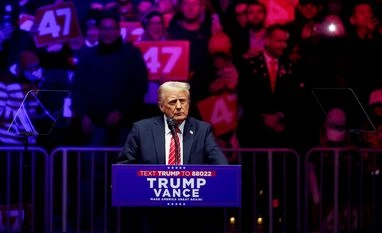 "Donald Trump, Trump")
Donald Trump (Photo: Bloomberg)
Listen to This Article
A US federal judge has temporarily blocked President Donald Trump’s order to freeze trillions of dollars in federal funding, moments before it was set to be implemented.
The freeze, initiated by Trump’s acting head of the Office of Management and Budget (OMB), Matthew Vaeth, instructed all federal agencies to suspend the distribution of government financial aid. The move was viewed as part of Trump’s broader strategy to dismantle programs centered on diversity, equity, and inclusion (DEI).
Court intervenes in funding freeze
On Tuesday, US District Judge Loren L AliKhan issued an injunction against the freeze, following a lawsuit from nonprofit organisations reliant on federal funding. The judge’s ruling will remain in place until at least February 3, when a further hearing is scheduled.
Prior to the ruling, there was widespread confusion and panic as state officials and organisations rushed to determine which programmes might be affected. Concerns grew about potential disruptions to healthcare, education, housing, and other essential services.
“This came out of the blue,” said David Smith, spokesperson for Shawnee Mission School District in Kansas, in a statement to the Associated Press.
Also Read

 "Donald Trump, Trump")
 "Donald Trump, Trump")
 "US President Donald Trump")
 "Deepseek")
 "Sunita Williams, Butch Wilmore")
Details of the freeze
The freeze was part of a broader review by the Trump administration to reassess government initiatives and eliminate programmes deemed to promote progressive causes. Vaeth’s memo outlined that agencies should evaluate their programs to ensure they align with Trump’s executive orders and suspend those linked to policies like "Marxist equity," "transgenderism," and other socially progressive issues.
Among the programmes under review are those related to tribal workforce development and special education. Each agency is tasked with determining whether their initiatives support issues such as gender ideology or abortion, with responses due by February 7.
Potential consequences of the freeze
If the freeze stands, it could disrupt funding for a variety of programmes, including healthcare, education, and infrastructure. Initiatives such as cancer research, food assistance, and federal student aid could experience delays or cuts.
Political reactions
The White House has yet to comment on the court’s decision, but it maintains that the freeze is necessary to ensure federal spending aligns with Trump’s policy priorities.
Democrats have denounced the move as unconstitutional and damaging to vital public services. Senate Majority Leader Chuck Schumer called the policy "a dagger at the heart of average American families," while other Democrats contend that Trump lacks the authority to unilaterally block funding that Congress has approved, according to The Guardian.
In response, Democratic attorneys general from 22 states and the District of Columbia have filed a lawsuit seeking to permanently block the freeze. Additionally, a coalition of nonprofits, businesses, and other advocates has argued that the freeze is unconstitutional and will harm millions of Americans.
Impact on essential services
The freeze had already caused significant disruptions before the court’s ruling. Officials reported problems with the Medicaid reimbursement portal, which is critical for providing healthcare to low-income Americans. White House Press Secretary Karoline Leavitt reassured the public that no payments had been affected, but uncertainty over the future of essential programs remained widespread.
More From This Section
 "Muhammad Yunus, Yunus")
 "Mahinda Rajapaksa")
 "Bangladesh, Bangladesh Flag")
 "Google Maps")
 "selena gomez crying")
Don't miss the most important news and views of the day. Get them on our Telegram channel
First Published: Jan 29 2025 | 12:47 PM IST