Permanent job creation appears to be somewhat missing in the country’s fast-growing and employment-intensive automobile industry. Top automakers are resorting primarily to hiring temporary and contractual staff to meet the rising demand for vehicles across segments.
An analysis of the employee data at the four top auto firms — Maruti Suzuki, Hero MotoCorp, Ashok Leyland, and TVS Motor — shows that less than 4 per cent of the 24,350 additional staff employed at the end of 2017-18 was permanent. Even as they grow, firms want to have flexibility in staff strength since demand often fluctuates.
More than 23,500 new jobs were contractual or temporary and in some cases, the permanent headcount happened to be lower than at the end of 2016-17. Take the instance of the country’s second-biggest commercial vehiclemaker, Ashok Leyland. As of March 2018, the Chennai-headquartered company had 16,802 temporary staff, 81 per cent higher, compared to March 2017. The number of permanent staff, however, came down marginally from 11,906 to 11,835 in the same period, according to the company’s annual reports.
The country’s third biggest two-wheeler maker, TVS Motor, saw a 41 per cent increase in headcount of temporary/contractual staff as of March 2018 to 10,297. The number of permanent employees, however, decreased about 1 per cent to 5,184.
Suzuki-controlled carmaker, Maruti Suzuki, which sells every second car in the country, employed over 17,000 contractual and temporary staff, including student trainees as of March 2018. This is an increase of about 35 per cent, compared to March 2017. The headcount of permanent or regular staff at the country’s most valued auto firm went up by over 5 per cent to 14,940 employees as of March 2018.
R C Bhargava, chairman at the carmaker, said the ratio of regular workers does not change significantly at the production areas of the plant. “It is usually the work at the non-production area such as loading and unloading of raw material and vehicles, cleaning and security, etc which gets done by the contractual staff. He said though there is not much difference between the wages of a regular and non-regular employee, the regular ones have a longer service record and therefore, enjoy some additional benefits,” he said.
The company had witnessed a violent protest led largely by contractual workers at the Manesar plant in 2012 that resulted in loss of life of a human resource executive and left several officials injured. The plant had to be shut down temporarily. The contractual staff now gets more benefits than they used to enjoy few years ago. Kuldeep Jhangu, general-secretary at the Maruti Udyog Kamgar Union, said the work duration of a temporary staff is seven months, while that of a contractual employee is a year. “A further employment depends on the company’s requirement and the performance and conduct of the staff,” he said. The temporary staff enjoys benefits like provident fund, canteen food, uniform, and bonus as well.

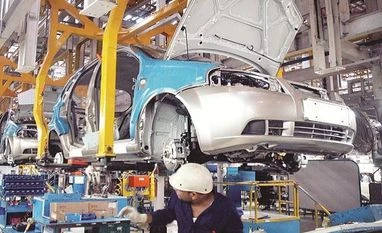 "Auto majors step up contract hiring to meet rising demand across segments")











