The emphasis laid by the government on green energy has opened the floodgates for private players in the field of energy conservation. Danfoss India, the Indian subsidiary of Denmark-based Danfoss, a global player in the climate and energy space and an enabler of zero waste environment, is eyeing 14-15 per cent growth in India. Danfoss is set to provide technologies for smart cities in India. In an interview with Komal Gera, Ravichandran Purushothaman, president, Danfoss India, unfolded the company's plans. Edited excerpts:
Why is India an important market for Danfoss?
India is the most important among the emerging economies for us because of its growth rate and limited adoption of energy-saving technologies. According to available estimates, over half of India's population will live in its cities by 2030. This figure will cross 70 per cent by 2050. With India's strapped energy resources, the need to build smart cities that help conserve energy for future generations has increased. We have proven technologies such as district cooling that can be used by both government and industry to become sustainable entities. This signifies the need for energy-efficient infrastructure, water efficiency, district cooling solutions and solutions for food safety that can aid sustainable development.
This technology is already in use at GIFT City in Gujarat for its heating and cooling requirements and has helped the management consume 65-80 per cent of energy as compared to conventional air-conditioning.
How can the development of smart cities help you scale up your business in India?
Danfoss had provided energy-efficient infrastructure to most airports in India. We intend to provide smart technologies that are not only sustainable but are also viable as mandated for smart cities in India. Power consumption in urban India goes up by 25-30 per cent in summer due to extensive use of air-conditioning. This can be curtailed by making energy-efficient buildings using renewable energy like solar power and design engineering.
What are your investment plans in India?
The company has recently completed its expansion in Chennai with a state-of-the-art R&D centre at an investment of $100 million. This is India's first LEED Platinum-rated manufacturing facility and is helping us realise high energy savings and a cleaner environment.
We have a headcount of 800 in India and our R&D team has 300 engineers. With the latest expansion, we can support the current requirement. Our focus will be on strong R&D suitable for Indian conditions. If states adhere to ease of doing business as is being mulled at the Centre we expect to register higher growth than the projected 14-15 per cent and this may entail more investments to cater to growing business.
Do you also provide solutions for agriculture?
India loses about 125 kg of agriculture produce per person per annum because we do not have sufficient post-harvest infrastructure. I am also the chairman for the CII's National Cold Chain Task Force and am responsible for working closely with governments, industry and other normative bodies to control food loss.
Independent research reports suggest India's high energy costs are a deterrent for private players from investing in cold storage units. A cold storage system that does not have the best automated technology costs around Rs 12 crore. A fully automated cold storage will cost around 30 per cent more. A 5,000 tonne cold storage costing Rs 12 crore will have an operating cost of Rs 1.5 crore, of which 60 per cent constitutes electricity cost. The use of efficient technologies and energy-efficient equipment can cut the power cost by half, making it sustainable in the long run.
Our interventions for energy efficiency in the food and infrastructure sector have helped Tamil Nadu banana farmers triple their profits. A similar activity is being undertaken in Karnataka for pomegranates.
Do you also provide technologies for conservation of water?
India has not paid due attention to the recycling of water and this has resulted in a dwindling water table in many parts of the country. Draining underground water for irrigation involves a cost and with lesser expenditure surface water can be recycled and put to better use. We are exploring opportunities to create synergy with the government and the private sector for use of efficient technologies for the conservation of water.
States like Madhya Pradesh, Gujarat and Orissa have eased norms for private participation and this has enabled us to make inroads into unexplored territories.

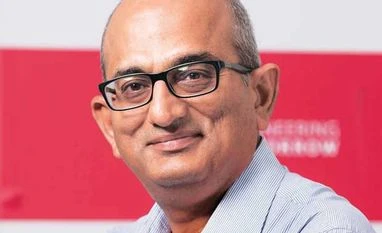 "Big opportunity in making India energy efficient: Ravichandran Purushothaman")


 Connect with us on WhatsApp