Supplies of essential products and fast-moving consumer goods (FMCG) are expected to remain uninterrupted even as there is the threat of the third wave of the pandemic.
The learnings from the first two waves, coupled with the government allowing seamless transportation across state borders, will ensure steady supplies of goods, ranging from edible oils to groceries and snacks.
Another reason for the confidence of companies about unhindered supplies is a higher rate of vaccination, coupled with mild symptoms seen in Omicron-infected individuals. Companies, too, on their part, are better prepared in case the number of Covid cases rises.
Adani Wilmar, which sells packaged foods including edible oils, has stocked up its warehouses and is ready to deploy more contract labourers if its existing workers turn positive.
“We have stocks for 21 days and are replenishing our warehouses across the country. We have stocked up on raw materials and our packaging is done in-house,” Angshu Mallick, chief executive officer (CEO) at Adani Wilmar, told Business Standard.
He, however, anticipates some logistics issues if the virus spreads in a wild manner.
“We have taken preventive measures, but Omicron doesn’t seem as bad as the Delta wave. We (employees and factory workers of Adani Wilmar) are vaccinated, and the chances of serious health issues are low.”
At the retail end, Devendra Chawla, CEO at Spencer’s Retail and Nature’s Basket, said: “After the first two waves, we are now experienced to handle situations or on-ground challenges. We are well prepared in case there are restrictions put in place.”
He added: “If store timings are restricted, we are ready to scale up our out-of-store business, which zoomed in the first two waves. We offer a great customer experience on our app, and make sure groceries are delivered to customers at their doorstep via WhatsApp chatBot app and phone calls.”
R S Sodhi, managing director at India’s largest milk producer, Amul, too, does not expect logistics or business to take a hit due to rising Covid infections.
The apex body of transporters is not worried, either.
“We faced an issue only in the first wave because state borders were sealed. In the second wave, the government made sure that supplies were not affected and allowed for seamless transportation,” said Pradeep Singhal, chairman of the All India Transporters Welfare Association (AITWA).
The company has taken precaution and adopted hygiene protocols at its office premises and factories. “All our employees and service providers are fully vaccinated. If anyone is suspected or confirmed to be infected, they are supported with leave with pay and assistance is also provided with quarantine as well as treatment,” the maker of Aashirvaad atta (wheat flour) said.
Parle Products has doubled its stocks with its distributors and at its warehouses. However, the biscuit major does not anticipate any disruption if restrictions and lockdowns are enforced.
“We have adequate material, raw and packaging. The possibility of supply chains taking a hit seems remote due to vaccinations,” said Mayank Shah, category head at Parle Products.
Dabur India is monitoring the situation.
“We have reinforced Covid-safe behaviour, and safety and hygiene norms. Our units are equipped with oxygen concentrators,” said Shahrukh Khan, executive director (operations).
Nestle India is following similar protocols.
“We will continue with our stringent safety protocols that we have in place and we have also put on hold any planned relaxations that we may have been considering ...,” Nestle India said.

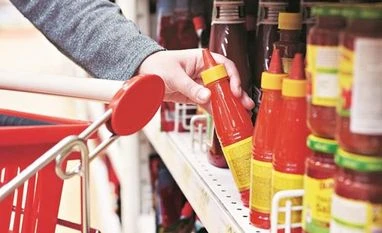 "FMCG companies prepared to tackle logistics issues amid Covid surge")












