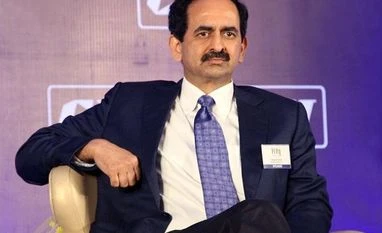
Have seen much better planning, operations via AI system: Sanjay Kirloskar

We have seen a much better planning and operations process via our AI system which is reducing delivery times to customers, says Sanjay Kirloskar

Sanjay Kirloskar
Sanjay Kirloskar
Pranjal Sharma New Delhi
4 min read Last Updated : Jan 09 2020 | 2:49 AM IST

Don't want to miss the best from Business Standard?

Kirloskar Brothers Ltd (KBL) has completed 100 years of its incorporation. KBL Pumps help irrigate over 65 per cent of India’s land and provide 35 per cent of the population with drinking water. KBL has been a pioneer in technology for many decades and has embraced fourth industrial revolution ahead many others. In a conversation with Pranjal Sharma, the chairman of KBL, Sanjay Kirloskar, lays out the importance of using emerging tech for manufacturing sector.

What is the overall policy and approach to new technologies at KBL?

Before Independence, when the rulers curbed manufacturing in India by imposing very high import duties on components, KBL found ways to make machines that were cheaper and better than the foreign machines which were promoted in India at the time. In a remarkable turnaround, today KBL is Britain’s largest pump manufacturer, through our subsidiary, SPP Pumps Ltd. Indian companies must use the latest technology for efficiency and self-reliance. We have grown into an Indian MNC with manufacturing facilities on four continents; the US in North America, the UK and the Netherlands in Europe, South Africa and Thailand and with sales to over 165 countries across the globe.

We are interested in understanding the new technologies available, but the ability to monetise them is the most important aspect before starting a project. There needs to be a clear benefit either to the customer, which they value, adding stickiness to the brand or a tangible benefit to the company operations. We operate the world’s largest 3D printer for pumps and also various other technologies like artificial intelligence (AI), augmented reality (AR) and virtual reality (VR). Each of these are deployed in specific areas where the company believes there is value.

Which kind of technologies have you applied so far?

We started with AI as a knowledge management system and then extended it to smooth operations by connecting the front end and operations via the AI system for greater automation. We have also implemented 3D printing in manufacturing with augmented reality (AR) and virtual reality (VR). We use AR for remote monitoring of the pumps which are often located in locations that are not easily accessible. And VR is used to train our teams which work on maintenance and repair. It’s been very interesting for KBL, this is a new area of development and has focussed more around training and skill upgrade. I think we still have a long way to go on the AR and VR side of the business and we will work to develop models we can monetise for these technologies in the next few years. We have quite a few ideas which we want to try.

How has this impacted the quality and cost of pumps?

We have seen a much better planning and operations process via our AI system which is reducing delivery times to customers. We also see the customer able to look at our products and be able to intelligently interact with them and get the information they require, adding value to the work they do. We have seen the 3D printing process clearly benefit the quality of pumps and again reduce delivery times. Our customers interact with three of the technologies. These are our AI system called Dolphin, our VR programmes for training and our AR programme for another specific requirement.

Was there a lot of reengineering of process required?

We have always ensured that data is complete across the organisation but given the changing trend of how the millennials and Gen Z interact with data we needed to make our systems more automated and intelligent so that we are able to use the company’s knowledge and learnings over the last 100 years seamlessly. This has been done via the AI systems and into the programmes sending data to our printers. Some items that were known to few people have been converted into logic on our AI systems, so everyone has access to it often without even knowing it. The system takes care of any errors that caused historic issues automatically. The tech is allowing us to implement self-diagnostics and predictive maintenance.

How has Internet of Things been used at KBL?

This has been more around our plants which have smart machines and products that have a lot more diagnostic systems and are able to communicate with us and the client for more optimal use and also to reduce down time and optimise spare part inventories.

Which parts of the process are automated at KBL?

There is a lot of automation around the front end of the business which starts at offer making and continues till the order is pushed into our SAP system. The sales team can then be more focused on developing the market and increasing our penetration.

One subscription. Two world-class reads.

Already subscribed? Log in

Subscribe to read the full story →
*Subscribe to Business Standard digital and get complimentary access to The New York Times

Smart Quarterly

₹900

3 Months

₹300/Month

SAVE 25%

Smart Essential

₹2,700

1 Year

₹225/Month

SAVE 46%
*Complimentary New York Times access for the 2nd year will be given after 12 months

Super Saver

₹3,900

2 Years

₹162/Month

Subscribe

Renews automatically, cancel anytime

Here’s what’s included in our digital subscription plans

Exclusive premium stories online

  • Over 30 premium stories daily, handpicked by our editors

Complimentary Access to The New York Times

  • News, Games, Cooking, Audio, Wirecutter & The Athletic

Business Standard Epaper

  • Digital replica of our daily newspaper — with options to read, save, and share

Curated Newsletters

  • Insights on markets, finance, politics, tech, and more delivered to your inbox

Market Analysis & Investment Insights

  • In-depth market analysis & insights with access to The Smart Investor

Archives

  • Repository of articles and publications dating back to 1997

Ad-free Reading

  • Uninterrupted reading experience with no advertisements

Seamless Access Across All Devices

  • Access Business Standard across devices — mobile, tablet, or PC, via web or app

Topics :artifical intelligenceAugmented Realityvirtual reality

Next Story




