
IOC to monetise pipeline assets, says many investors interested
The firm is likely to sell stakes in one or two of its vast network of crude oil and petroleum product pipelines in the country, its Director (Finance) Sandeep Kumar Gupta said
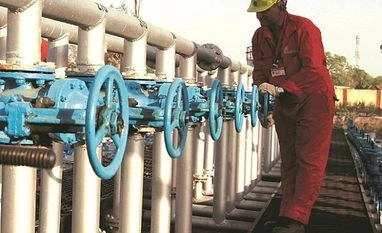 "IOC to monetise pipeline assets, says many investors interested")
Explore Business Standard
The firm is likely to sell stakes in one or two of its vast network of crude oil and petroleum product pipelines in the country, its Director (Finance) Sandeep Kumar Gupta said
State-owned Indian Oil Corporation (IOC) is likely to sell stakes in one or two of its vast network of crude oil and petroleum product pipelines in the country under the asset-monetization plan, but won't give up control, its Director (Finance) Sandeep Kumar Gupta said Tuesday.
"InvIT could be one model which we may look at but we won't sell 100 per cent. We will remain the operator," he said on a conference call with analysts and investors.
Finance Minister Nirmala Sitharaman in her Budget for fiscal year beginning April 1, announced monetisation of oil and gas pipeline assets of IOC, gas utility GAIL (India) Ltd and Hindustan Petroleum Corporation Ltd (HPCL).
Gupta said IOC's pipeline assets offer huge potential for unlocking value and a lot of investors are looking at investing in such assets. He, however, did not name the investors.
IOC operates a network of more than 14,600-km of pipelines that are used to transport crude oil to refineries and fuel to consumption points.
Gupta said the company cannot let go of control of the pipelines as they are critical to the operations of the company.
Only a minority stake in the pipelines will be sold.
The proceeds of such monetisation would initially go towards boosting capital spending of projects such as one for producing hydrogen fuel, renewable energy ones or petrochemical plants, he said.
The government, which owns 51.50 per cent of IOC, may also tap into the funds by seeking a special dividend.
"We may sell stake in one or two pipelines to begin with," he said.
GAIL too is planning to launch an InvIT of its two gas pipelines between Dahej and Bengaluru.
The nation's top gas marketing and transportation firm plans to monetise the Dahej-Uran-Panvel-Dabhol pipeline and Dabhol-Bengaluru pipeline by setting up an Infrastructure Investment Trust (InvIT).
InvITs are like a mutual fund, which enables direct investment of small amounts of money from possible individual/ institutional investors in infrastructure to earn a small portion of the income as a return.
GAIL too plans to retain a majority stake in the pipelines that run from Dahej in Gujarat to Dabhol in Maharashtra and from there to Bengaluru in Karnataka.
GAIL owns and operates a natural gas pipeline network that spans 12,502 kilometers, mostly in the western, southern, and northern parts of the country. It is building more pipelines in the eastern part of the country.
Asked if IOC can also look at hiving off retail fuel outlets into a separate subsidiary for unlocking value, Gupta said, such a possibility cannot be ruled out but there is no such move on the radar.
Gupta expects crude oil prices to soften after March.
The current hardening was due to cuts by OPEC plus but fundamentals remain weak, which will exert pressure on prices, he said adding current rates won't sustain.
The rise in international oil prices has driven retail fuel rates to their all-time high levels.
IOC owns and operates five pipelines for transporting crude oil from ports on coast to its refineries. The longest among them is the 2,646-km Salaya-Mathura pipeline from Gujarat to Uttar Pradesh.
Besides it owns and operates 22 petroleum product pipelines transporting fuels such as petrol, diesel and ATF.
IOC also owns two natural gas pipelines - 132-km Dadri-Panipat and 1,421 km Ennore-Tuticorin line, and two LPG lines - 280-km Panipat-Jalandhar and 873-km Paradip-Haldia-Durgapur.
(Only the headline and picture of this report may have been reworked by the Business Standard staff; the rest of the content is auto-generated from a syndicated feed.)
First Published: Feb 02 2021 | 2:30 PM IST

