Mutual funds should start disclosing retail assets: Reliance MF CEO

Sundeep Sikka explains how mutual funds can create business models that can deliver long-term growth and profitability.
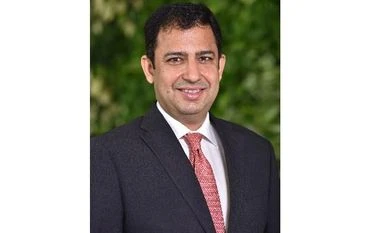
Sundeep Sikka, CEO of Reliance Mutual Fund.
Jash Kriplani Mumbai
Last Updated : Nov 27 2018 | 2:02 AM IST
The mutual fund (MF) industry is adjusting to new regulatory environment and market conditions. A year after Reliance MF listed on exchanges, the company’s chief executive officer Sundeep Sikka told Jash Kriplani his views on how the industry can create business models that can deliver long-term growth and profitability. Excerpts from an interview

How has Q2 been for the industry and for Reliance MF?

Overall, the gross industry flows have come down sharply in recent months. But our focus on the stickier retail investors is yielding results. Our SIP flows for Q2 were better than Q1 while new SIP count is close to one lakh for the September quarter.

Do you feel scrapping of upfront commission will dis-incentivise small IFAs / distributors?

Globally, whenever volumes go up, there is a pressure on the fee structure. With new structure on total expense ratio (TER) in place, both the AMCs and the distributors will have to re-look at their business model. The fall in TER will have to be compensated with higher volumes. The stopping of upfront commission aligns the interest of distributors with the investors and AMCs, which is positive. However, for small independent financial advisors (IFAs), covering for the client acquisition costs can be little bit of a challenge. Under the new rules, the upfront is only for systematic investment plans (SIPs), which is one per cent after a period of one-year. So, all market participants will need to seriously re-look at their business models. But one must remember that anything good for the investor, is good for the industry.

When can we see investors return to liquid schemes?

The liquid category is highly dominated by institutional investors. Even in 2013, this set of investors had become risk-averse which had triggered redemptions in the industry. Going ahead, investor confidence should come back as things stabilise in the corporate bond markets. However, there could be some consolidation in the liquid category. Rather than spreading out in different schemes and fund houses, investor money is likely to gravitate towards large-sized schemes and large fund houses. Some of this shift is already visible.
  
How do you see the ongoing volatility impacting the industry volumes and profitability?

Different asset management companies (AMCs) have different business models. There are AMCs that focus on institutional business and there are fund houses that focus on high net-worth investors (HNIs). However, unless a fund house doesn’t take keen interest in building a retail base, it is difficult to realise the operating leverage potential of a fund management business. Our focus continues on long term profitable growth by targeting retail investors. 

How far has the industry progressed on the retail front?

The MF industry was set-up to meet the needs of the retail and small investors. While the industry has made some progress in that direction, there is still a long way to go. We feel it’s time to move away from overall AUM disclosure to retail AUM and retail investor disclosure; which will help in bringing higher focus and effort by the entire industry to deepen the markets.

Can you share rationale for recent tie-up with Vakrangee, Payworld?

We have entered a number of such tie-ups recently, such as Payworld, Suvidhaa Infoserve, Vakrangee and Weconnect, giving us access to some 2,000 locations. Our focus was always in growing into small cities and towns. Such tie-ups give us deeper access to the hinterland of India or Bharat; where we believe there is a huge latent demand waiting to be tapped which can grow the market.

What will be the role of traditional channels with digital on the rise? 

In the last 12 months since listing, we have opened branches in 100 locations taking our total to 300 -- that is the highest in the industry. Clearly, we believe the traditional brick and mortar model remains important, particularly given our thrust on B15 (beyond the top-15) locations. Digital channels compliment the traditional model. Our digital sales have crossed one lakh in September 2018; doubling in the last 18 months. So for us, digital channels are as important as our branch network.

How do you see discontinuation of Aadhar-based e-kyc impacting growth of the MF industry?

The market regulator--Securities and Exchange Board of India (Sebi) --is strongly focused on technology. The regulator wants to make the process of investing and on-boarding of investors a seamless experience, which is also the need of the hour. The industry can expect a more enabling regulatory framework so that the investors have a paperless and faster experience. Our experience has been that more investors from smaller cities and towns are using digital mode of investing. It is not the metros necessarily driving the digital sales.

How do you see rise of digital impacting small IFAs / distributors?

Both the traditional and digital channels will co-exist. Some investors will prefer the branch network; for e.g. retired people need hand-holding and hence need distributors or IFAs. The younger generation may use digital channels more. The emphasis here is to provide smarter, easier experience to users. Even distributors are embracing technology in a big way; doing their research online, while using traditional platforms for investing. That’s why we are investing in both in a big way.

What will be your investment strategy in the current market environment?

Over the last six month the market has remained volatile. However, from our point of view the valuations have turned quite attractive. On the macro-level, the oil prices have started cooling off, which is a positive sign. Also, corporate profitability has started improving, which is not getting reflected in stock prices at present because of weak investor sentiments. We have started re-deploying cash across our equity schemes. Sector-wise, we are bullish on pharma, IT, consumption and engineering

One subscription. Two world-class reads.

Already subscribed? Log in

Subscribe to read the full story →
*Subscribe to Business Standard digital and get complimentary access to The New York Times

Smart Quarterly

₹900

3 Months

₹300/Month

SAVE 25%

Smart Essential

₹2,700

1 Year

₹225/Month

SAVE 46%
*Complimentary New York Times access for the 2nd year will be given after 12 months

Super Saver

₹3,900

2 Years

₹162/Month

Subscribe

Renews automatically, cancel anytime

Here’s what’s included in our digital subscription plans

Exclusive premium stories online

  • Over 30 premium stories daily, handpicked by our editors

Complimentary Access to The New York Times

  • News, Games, Cooking, Audio, Wirecutter & The Athletic

Business Standard Epaper

  • Digital replica of our daily newspaper — with options to read, save, and share

Curated Newsletters

  • Insights on markets, finance, politics, tech, and more delivered to your inbox

Market Analysis & Investment Insights

  • In-depth market analysis & insights with access to The Smart Investor

Archives

  • Repository of articles and publications dating back to 1997

Ad-free Reading

  • Uninterrupted reading experience with no advertisements

Seamless Access Across All Devices

  • Access Business Standard across devices — mobile, tablet, or PC, via web or app

Next Story



