Assocham’s new President and Hiranandani Group’s Managing Director, Niranjan Hiranandani, says tax rates should be slashed for individuals and partnership firms to boost consumption and revive investments. He tells Subhayan Chakraborty & Indivjal Dhasmana that the low corporation tax rate of 17 per cent should be expanded to all companies and not just the new manufacturing firms. Edited excerpts:
At the Assocham annual general meeting, Prime Minister Narendra Modi exhorted companies to invest. Why is economy not reviving despite reforms initiated by the Modi government?
The prime minister has clarity on what he wants to attain, and has the ability to focus and see that things are done. Were demonetisation, goods and services tax (GST), Real Estate Regulatory Authority Act (RERA), and the Insolvency and Bankruptcy Code not good ideas? The answer is these were. Now, you have lots of good ideas. But if you pack them together, without taking care of the fallout of these ideas till they become streamlined is an issue that we are all facing. During demonetisation there was a problem relating to the marginalised people not having enough cash, while in the real estate, there was a lack of money available for real estate projects despite setting up of RERA. So, the processes that were needed to take advantage of all these things were not put into place early enough.
So, what needs to be done?
To become a $5-trillion economy, economic growth rate needs to reach 10-12 per cent a year and not the current 4-5 per cent. For that, we need to improve the liquidity and demand conditions in the market. After demonetisation, the market deposited all the money into banks and mutual funds. But the banks were not able to lend that kind of money directly, so they lent it to non-banking financial companies (NBFCs). Mutual Funds also put money in stock market. NBFCs were the one to lend money to most businesses. But after the IL&FS debacle, the liquidity in the NBFC sector went down and they stopped lending because they themselves were sick. Now, there is a lack of liquidity both from the banking system and NBFCs, which is the structural problem that we are facing. So, we have suggested that NBFCs be revamped fast, allowing them to become banks while more private banks are created.
Aren’t licences given on tap for small finance banks?
I want 50 new banks to come up. NBFCs need to be incentivised to become banks.
But how do you activate demand?
There is a lack of confidence right now. For that, I suggest a cut in the GST rates and an infusion of Rs 1.2 trillion into the economy in six months. The fallout of this will be higher fiscal deficit and more money would have to be compensated to the states due to GST cuts. But both these risks are worth taking, because these steps will spur demand at the end. On the supply side, the government has reduced the corporation tax rate to 25 per cent. But the tax cuts are also needed for individuals, partnerships firms, and all other kinds of businesses that are still paying much higher tax rates.
Will widening of fiscal deficit not raise the inflation rate?
This is the only way to save the economy today.
Why aren’t investments rising despite a cut in the corporation tax rates?
There’s an issue. The government’s decision to reduce corporation tax rate to 17 per cent for new companies is faulty. I am here running my company for 35 years and now need to set up a new company to take advantage of the 17 per cent tax rate, which I think is wrong.

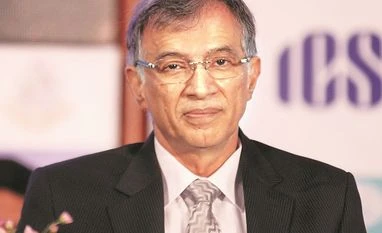 "NBFCs need to be incentivised to become banks, says Hiranandani Group MD")











