During the upcoming visit of US President Donald J Trump to India, the National Association of Software and Services Companies (Nasscom) will take up issues relating to mobility of skilled individuals with the US administration.
According to officials of the industry body, it will seek differentiation between skilled talent mobility and usual immigration.
“When there is lack of STEM (science, technology, engineering and math) talent, mobility of skilled professionals from India supports innovation in US firms. So, it shouldn’t be treated as normal immigration,” said the official.
In the recently-concluded Nasscom summit, president of the industry body Debjani Ghosh said the US administration has to realise that 90 per cent of the H-1B visa holders are going to US companies and not to Indian firms.
Even through Indian IT firms are currently employing around 55,000 American professionals in the US, which is significantly higher than the previous years, the rejection rate of H1B visa applications for Indian professionals has increased manifold.
According to US Citizenship and Immigration Services (USCIS) data, denial rates for H-1B applications increased four times from just six per cent in 2015 to around 24 per cent in July-September quarter of the current fiscal.
For instance, Tech Mahindra saw its denial rate of visa applications at 41 per cent, while it was at 34 per cent for TCS, 53 per cent for Wipro and 45 per cent for Infosys during this period.
“Nasscom will be represented by the president and officials, who are engaged in global trade development, in the Indian delegation,” another official said.
Ever since Trump took charge as US President, Indian IT firms and Nasscom have increased their spend for lobbying activities. Last year, Nasscom was the third biggest spender on lobbying on immigration and advocacy, according to data from research group Opensecret.org.
According to the research group, the industry body spent $510,000 in 2019. Microsoft was the biggest spender on lobbying activities at $7.8 million, followed by Cognizant, which spent $1.7 million during this period.
Despite consistent advocacy of technology firms for a liberal visa regime, the US administration has not eased rules much in the last four years.

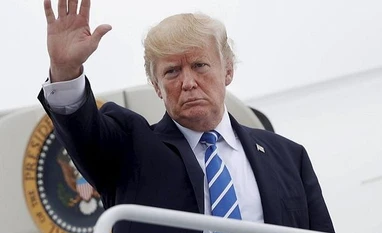 "Trump visit: Nasscom to lobby for mobility of skilled software executives")












 Connect with us on WhatsApp