Turning around Tata Motors domestic biz need of the hour: Chandrasekaran

Tata Motors' standalone net revenues increased by 3.7%, says Chandrasekaran
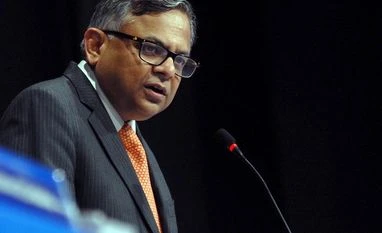
N Chandrasekaran, Chairman, Tata Sons at the TCS AGM in Mumbai. File Photo: Kamlesh Pednekar
N Chandrasekaran, Chairman, Tata Sons at the TCS AGM in Mumbai. Photo: Kamlesh Pednekar
Press Trust of India New Delhi
Last Updated : Jul 30 2017 | 2:24 PM IST
Tata Motors Chairman N Chandrasekaran has said turning around domestic business of the company is "the need of the hour" as it has suffered from delays in new product launches, lack of adequate response to competition and an unsustainable cost structure.

Addressing shareholders in the company's Annual Report 2016-17, he said Tata Motors' standalone net revenues increased by 3.7 per cent to Rs 44,777 crore for the 12 months ended March 31, 2017 but standalone loss before tax for the year fell to Rs 2,421 crore, compared with Rs 67 crore in the prior year.

"In the domestic business segment, business turnaround is the need of the hour and management is working with renewed focus and energy to improve our market share, reduce our cost base, streamline the supply chain and ensure launch of products on time to delight our customers," he said.

The company's market share in commercial vehicles (CV) segment has fallen to 44.4 per cent from a high of 59.4 per cent in FY2011-12, while market share for passenger vehicles (PV) declined to 5.2 per cent from 13.1 per cent in the same period, he added.

"Overall, delays in new product launches as well as lack of adequate responsiveness to the competitive environment and an unsustainable cost structure have contributed to this performance," Chandrasekaran said.

Consolidated net revenues declined by 1.2 per cent to Rs 2,69,850 crore for the 12 months ended March 31, 2017 and consolidated profit before tax for the year fell sharply to Rs 9,315 crore, compared with Rs 14,126 crore in the prior year, he added.

Chandrasekaran, however, expressed confidence that a series of actions taken by the management team would succeed and show an improved performance in both the commercial vehicle and passenger vehicle segments in India and deliver better financial results.

Expressing similar views, Tata Motors Managing Director Guenter Butschek said: "Our immediate priority now is on execution - to address the top concerns of supply constraints, to advance the launch time of some of our new products." He further said: "In full alignment with the board, we have finalised a business turnaround plan through which we take upon ourselves to deliver a robust bottom-line improvement in FY17/18."

Butschek said one of the most important initiatives in 2016-17 was the Organisational Effectiveness (OE) exercise, with the objective of bringing "the much needed empowerment and accountability within the business unit, strong functional oversight based on the key principles of speed, simplicity and agility".

"Due to its magnitude and complexity, the transition of the new management structure w.e.f. from April 1, 2017 faced some challenges, which in the meanwhile is getting addressed on a case to case basis," he added.

While challenges such as demonetisation and transition to BS IV affected business, Butschek also admitted that Tata Motors did not adequately react to the changing environment.

Due to the unexpected and unprecedented changes in the market, he said, "we faced a rather hostile business cycle with headwinds in the form of demonetisation, the famous Supreme Court ruling on BS4 transition."

As a matter of fact, Butschek further said, "it was not only the market volatility which affected our performance, but mainly our sluggishness in reading the market in time, as we were effectively late to respond."

Tata Motors' ImpACT (Improvement by Action) projects with full time senior leaders and dedicated teams having ownership at executive committee level helped the company focus on four areas – intense top-line focus, cost optimisation, customer centricity and structural improvements in processes, he said.

"These projects have started to payback and have created a great change of momentum in the entire organisation. We have built a very strong savings potential with positive effects in FY17/18 and the years to come," Butschek said. 

One subscription. Two world-class reads.

Already subscribed? Log in

Subscribe to read the full story →
*Subscribe to Business Standard digital and get complimentary access to The New York Times

Smart Quarterly

₹900

3 Months

₹300/Month

SAVE 25%

Smart Essential

₹2,700

1 Year

₹225/Month

SAVE 46%
*Complimentary New York Times access for the 2nd year will be given after 12 months

Super Saver

₹3,900

2 Years

₹162/Month

Subscribe

Renews automatically, cancel anytime

Here’s what’s included in our digital subscription plans

Exclusive premium stories online

  • Over 30 premium stories daily, handpicked by our editors

Complimentary Access to The New York Times

  • News, Games, Cooking, Audio, Wirecutter & The Athletic

Business Standard Epaper

  • Digital replica of our daily newspaper — with options to read, save, and share

Curated Newsletters

  • Insights on markets, finance, politics, tech, and more delivered to your inbox

Market Analysis & Investment Insights

  • In-depth market analysis & insights with access to The Smart Investor

Archives

  • Repository of articles and publications dating back to 1997

Ad-free Reading

  • Uninterrupted reading experience with no advertisements

Seamless Access Across All Devices

  • Access Business Standard across devices — mobile, tablet, or PC, via web or app

Next Story


