Home / Companies / News / Unilever's emerging-market focus to grow in post-Brexit world
Unilever's emerging-market focus to grow in post-Brexit world
Indian subsidiary of the global major describes the rise of these economies as a mega trend and shaping future strategy
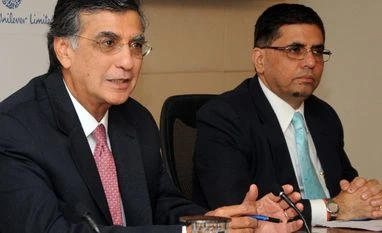
(from left to right) Harish Manwani, Chairman, Hindustan Unilever and Sanjiv Mehta, CEO & MD, HUL announcing the company’s second quarter results in Mumbai (Pic: Suryakant Niwate)
Britain's historic vote last week to opt out of the European Union rattled global markets but the importance of India and China has never been greater in this changed world order.
At the 83rd annual general meeting of Hindustan Unilever (HUL) on Thursday, chairman Harish Manwani described the rise of emerging markets (EMs) as a mega trend. “Nothwithstanding the recent slowdown, China, India and other EMs have led global growth and will continue to do so,” he said in his speech that preceded shareholder questions.
The beacon of hope EMS offer is expected to see entities such as Unilever, the world's second largest consumer goods company, tilt further towards these markets. Which already give 58 per cent of its revenue, analysts said.
The importance of Unilever's Indian subsidiary, then, is expected to grow, they added. The Anglo-Dutch major, for the record, spent $3.2 billion (Rs 19,220 crore) in 2013 to raise its stake to 67 per cent in HUL from 52.5 per cent earlier.
Manwani noted the London-and-Rotterdam-based company had, from its India experience, created a global distributor management system called LEVEREDGE. This has been enforced in Southeast Asia and Africa. Pureit, the water purifier it first launched here, had since been taken to several other Unilever markets. Similarly, soap brand Lifebuoy's ‘Help a Child reach 5’ campaign, developed in India, has been extended across the world, he said.
Indian businesses, said Manwani, must strengthen their global presence and HUL was turning to its parent in this regard. “More than ever before, businesses need to combine global capabilities and research & development expertise with local consumer insights. Creating the right organisation and mindset is critical to achieving this balance.”
In an increasingly connected world, Manwani said some of the other mega trends were digitisation and sustainability.
For instance, Unilever, he said, had launched two initiatives — LiveWire and People Data Centre — in a bid to better harness big data and technology. “LiveWire is an innovative cross-functional analytical platform that enables real-time decision-making across operating units. People Data Centre uses advanced analytics to provide real-time consumer insights and enable personalised consumer engagement,” Manwani said.
Closer home, HUL is increasing its investments in digital and social media marketing, setting up 'command centres' for critical events and campaigns to monitor consumer feedback in real-time.
E-commerce is another area where the company has been making investments, tying up with local grocers on a platform called Humarashop. This platform was launched last year by HUL.
Parallely, it has increased tie-ups with e-tailers and is expected to get aggressive there as it builds a dedicated in-house team for this channel.
HUL's focus on sustainable sourcing and business practices would continue and so would its emphasis on having a "social purpose" for its brands, said Manwani.

 "Unilever's emerging-market focus to grow in post-Brexit world")


