We are a network of networks, says Visa Group's T R Ramachandran

The new-age payments' ecosystem has the potential to upset the apple cart of even a well-entrenched global player like Visa International
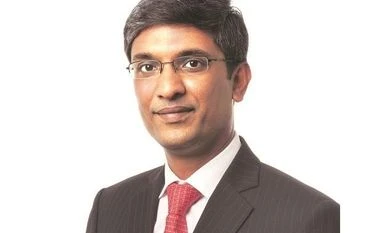
T R Ramachandran, Country Manager (India & South Asia), Visa Group
Raghu Mohan
5 min read Last Updated : Sep 28 2020 | 6:05 AM IST
The new-age payments’ ecosystem has the potential to upset the apple cart of even a well-entrenched global player like Visa International. It wants a bigger slice of the e-commerce pie, is building partnerships with legacy financial firms and newbies, and taking advantage of the account aggregator ecosystem. T R Ramachandran, Visa’s group country manager (India & South Asia), spoke to Raghu Mohan on the emerging landscape. Edited excerpts:
 
What kind of  an increase has Visa seen in contactless payments during the pandemic?
 
There are 12 countries with more than 90 per cent contactless penetration and 50-plus more where at least half the face-to-face transactions are likewise, up from 35 per cent in Q3C19. Excluding the US, 63 per cent of the transactions were contactless (44 per cent for Asia Pacific, including India), up from around 50 per cent in Q3C19. They have become a driving differentiator, with 63 per cent of consumers saying they would switch to a new business that offers such options. Our studies show that nearly four in five consumers have changed the way they pay now. And we are witnessing growth in newer categories like pharmacies and drugstores.
 
How do you propose to hook into the e-commerce space?
 
E-commerce represents only about 14 per cent of global retail spending. Visa's share of digital commerce is approximately 3X the physical point of sale. E-commerce currently services more than 95 per cent of the country’s PIN codes. We want to improve both experience and security for online consumers. For experience and payment success rates (PSR), we launched ‘Visa Safe Click’ last year — a Made in India solution that eliminates the one-time password friction for transactions up to Rs 2,000. It is now deployed by Paytm, PhonePe and Flipkarts. We have introduced tokenised payments on the Google Pay app tap-and-pay, in-app and scan-and-pay transactions without compromising card information. We have also launched a network-level EMI solution for e-commerce purchases without having to check with their bank. ‘Cybersource’, our payment gateway, is helping e-commerce acquirers and merchants improve PSR and offer industrial-scale transaction processing per second capacity, while dealing with frauds more efficiently.
 
Will the account aggregator (AA) ecosystem hasten the progress towards open banking in India?
 
AA will bring in a whole wave of open banking or, as we call it, “open data”, since the lines between money and data movement are blurring. If you think about it, it democratises access to financial services, reducing the “moat” of established players. You can go to your preferred bank or fintech for your credit requirements, and your bank, with your consent, will share your data with the lender — aiding better underwriting decisions and possibly a better deal for you. This may also result in significant innovation in money movement across sectors like transportation, healthcare, oil and gas and education. I believe one of the first beneficiaries of the AA model could be better lending to micro, small, and medium enterprises.
 
In what way will the account aggregator system change the onboarding of customers, and what does this mean for legacy financial firms?
 
AA will act as a “consent broker” to obtain information from consumers and businesses, then aggregate the financial journey — from bank accounts, insurance companies and credit cards — to a single-window operation and share it with financial service providers in real time. A substantial benefit of this is the ability to bring together data from myriad sources to one place for its effective use by multiple participants. In a country of around 220 million credit-eligible customers, open banking can provide legacy financial institutions with in-depth information across providers. And, lenders can enable credit at-scale.
 
How does Visa propose to leverage the power of its network, partnerships, and value-added services beyond the realm of the traditional?
 
The traditional approach — physical cards and transactions running across a single network — will challenge money movement. Payment infrastructure led by regulators and governments are modernising, and digital payment experiences are evolving. However, the trust, scale and security we bring to the table will never change, which is why we now think of ourselves as a “network of networks”.
 
We aim to service all endpoints by partnering to open traditionally closed-loop ecosystems. Besides C2B, we think there are other flows where digitisation represents new opportunities — P2P, B2C, B2B, B2B and G2C. A transaction can originate in one network and culminate in another — start from a card, and end up in a bank account. We are also building, acquiring or partnering with non-card and real-time payment networks. B2B Connect even uses blockchain for cross-border transfers. With our Visa Developer Platform, we are building partnerships. For instance, with Innoviti, we are offering “buy now, pay later” through Jocata. On Google Pay, for both offline and online payments, we are growing our network to include business payments in blockchain, account-to-account and real time payments, as also advising and supporting our clients in consulting, analytics and risk management.

One subscription. Two world-class reads.

Already subscribed? Log in

Subscribe to read the full story →
*Subscribe to Business Standard digital and get complimentary access to The New York Times

Smart Quarterly

₹900

3 Months

₹300/Month

SAVE 25%

Smart Essential

₹2,700

1 Year

₹225/Month

SAVE 46%
*Complimentary New York Times access for the 2nd year will be given after 12 months

Super Saver

₹3,900

2 Years

₹162/Month

Subscribe

Renews automatically, cancel anytime

Here’s what’s included in our digital subscription plans

Exclusive premium stories online

  • Over 30 premium stories daily, handpicked by our editors

Complimentary Access to The New York Times

  • News, Games, Cooking, Audio, Wirecutter & The Athletic

Business Standard Epaper

  • Digital replica of our daily newspaper — with options to read, save, and share

Curated Newsletters

  • Insights on markets, finance, politics, tech, and more delivered to your inbox

Market Analysis & Investment Insights

  • In-depth market analysis & insights with access to The Smart Investor

Archives

  • Repository of articles and publications dating back to 1997

Ad-free Reading

  • Uninterrupted reading experience with no advertisements

Seamless Access Across All Devices

  • Access Business Standard across devices — mobile, tablet, or PC, via web or app

Topics :CoronavirusVisaDigital Payments

Next Story



