Manish Chokhani, chairman, TPG Growth India, says the government should privatise public sector undertakings and use the capital to build infrastructure. Speaking on the sidelines of NYU Stern India Alumni Group Conference 2014, he tells Samie Modak and Sachin Mampatta the National Democratic Alliance government will bring about reforms strategically, much in the manner of a chief executive. Edited excerpts:
Despite the sharp gain, you continue to remain bullish on the Indian market. We had effectively gone below our long-term multiples. India has gone up along with other emerging markets. Even Brazil, which is going through a recession, performed well. Indonesia, which has recently appointed a new president, has done well, too. Today, the benchmark index is trading at 17 times (one-year forward earnings), but there are sectors trading at 25-30 times. So, it’s not as if the market halts at a logical number in its upward journey. Technology and banking stocks are sub-15; so, there is a lot of headroom there. A lot of cyclical stocks are pricing in growth. So, as earnings catch up, these will also be 10-12 times. Therefore, there is enough room in this market to grow in the long term.
When will the growth in earnings catch up? To begin with, you will see it in consumer-oriented sectors. Automobile companies are already seeing fantastic earnings. Infrastructure and manufacturing will take time. The return on equity will start improving, but one might not see it translating into profits immediately. We are 12 months away from widespread expansion in earnings. Between now and the next Budget, we will see a series of announcements. That will be enough to keep everyone excited.
Are you happy with the way things are moving on the reforms front? The government is doing things on the volume and capacity building fronts. It is also doing things on the productivity-enhancing side; on the value-addition side. All the moves one would have carried out as CEO have already been initiated by (Prime Minister) Narendra Modi. These are far-reaching. There comes a tipping point when all these converge. It is being done very strategically.
Is it reform by stealth?
No. It is like a game of chess. This is what I call statecraft. This is not headline-grabbing, but doing it one step at a time. These are long-term and deep reforms.
Do you think the coal sector has been de-nationalised?
The question is whether coal is nationalised. If the answer is no, the opposite preposition holds true.
You are a big believer in privatisation.
The government has no business running SAIL (Steel Authority of India Ltd) or Air India and holding on to shares of ITC. Why on earth does the government want to hold on to a cigarette company? Half the disinvestment target can be met by selling stake in ITC. You can use that money to build infrastructure. Those will be real national assets. The government pays about $75 billion every year as interest, which implies $800-900 billion of debt. Against this debt, the assets are largely public sector companies and departments such as railways and insurance. On these, it is taking dividend, including disinvestment, of not even $10-15 billion a year. So, essentially, you can’t even service your interest. Clearly, you have to shrink this balance sheet. I think the moment will come only post-2016, when the government will have majority in the Rajya Sabha, too.
In the past month, foreign institutional investors (FIIs) have sold about $1 billion. Is the interest of foreign investors in the Indian market waning?
They are leveraged players. So, there is a carry-trade going on, with low interest rates. This carry-trade jumps from market to market. Two years ago, it was Japan. Now, it will move to Europe, as they will have to unleash quantitative easing there, too.
It is like moving borrowing from one bank to another. At the time of a change, you have problem. But eventually, the other person gives you more credit than the previous bank and you continue doing what you did in the past.
If I am borrowing in a currency that is weakening and the interest rates are low, I am in heaven. This was the case with Japan — it had zero interest rates and its currency was falling. So, it was a no-brainer; you borrow in Japan and put it anywhere in the world. Currently, that is what is happening in Europe. The euro is going to collapse and is currently on a downward spiral against the dollar and the interest rates are as close to zero as possible. So, if you are a hedge fund, the trade to do is borrow in euro and invest anywhere in the world.
Are the stimulus packages announced by central banks around the world helping?
The fact is the government has over-capacity of everything. All this money is not solving the problem of indebtedness. All the problems have gone to government balance sheets. At some point, the bond market will freak out. Until then, expect money to keep gushing around the world.
Until the real world has not put any capacity, financial markets and securities markets will create fresh bubbles. And, from time to time, central banks come and deflate the bubble. This is then played all over again. There is no cure for this. The fact is the world has bad demographics, and too much capacity.
Which sectors should one invest in now?
There is a full bouquet in India. You could choose any company when the country is growing at five-six per cent. It is very hard for things to not go right. We will be two times, in terms of gross domestic growth, in the next three years. For example, we have 2.6 million cars, which China had seven years ago. Currently, China has 80 million cars. Our car market can grow six times. Even if we grow two-three times, there is big room to grow. So, trade will move from consumer goods to more discretionary trade. Per capita income has remained stagnant through the past four or five years. This will pick up and give you extraordinary beta trade. Right now, the easiest bets are financials and consumer cyclicals. Technology looks interesting, too. There is enough to do.
Which are the sectors to avoid?
It is a valuations-based call. In the past decade, the trade was pertaining to commodities and hard assets. Currently, those are not in favour. There will be a time when these become very cheap again.
Do you see high FII ownership as a risk to the Indian market?
I think foreign investors are under-invested here. India doesn’t comprise a major asset class. The issue is all large companies are maxed out in terms of FII ownership and we are not able to create new avenues. Also, despite huge savings of about $500 billion, only three per cent of the domestic market is in mutual funds. We have to create an environment to get our investors in equities and provide that risk capital. We don’t have defined pension plans that invest in equities. In Singapore, Chile and the US, there are defined plans through which a certain amount goes into equities.
Do you think the government is late in starting the disinvestment process for this year?
I am not a lover of disinvestment. If it’s a continuous supply tank and you don’t get good price, you end up selling assets which you are holding at eight per cent costs — the 10-year benchmark rate. It is a wrong way of enchasing government assets. If they have to do it, they should give it to taxpayers by giving them tax breaks. Today, we are giving it away for free to foreigners.

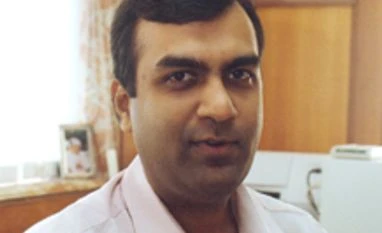 "Modi has initiated all moves one would have made as CEO: Manish Chokhani")

