Covid-19 pushes 80 million people in Asia into extreme poverty: ADB
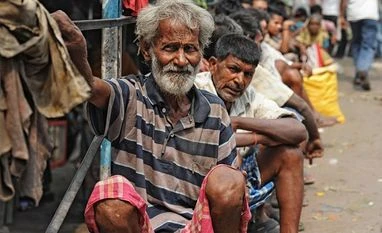
Covid-19 pandemic has pushed an estimated 75 million to 80 million more people in developing Asia into extreme poverty as of last year compared with what would have happened without Covid, ADB said
ANI The coronavirus disease (COVID-19) pandemic has pushed an estimated 75 million to 80 million more people in developing Asia into extreme poverty as of last year compared with what would have happened without COVID-19, according to a new report by the Asian Development Bank (ADB) released on Tuesday.
The 'Key Indicators for Asia and the Pacific 2021' says the pandemic is threatening Asia and the Pacific's progress toward critical targets under the Sustainable Development Goals (SDGs).
Assuming that the pandemic has increased inequality, the relative rise in extreme poverty -- defined as living on less than 1.90 dollars a day -- may be even greater. Progress has also stalled in areas such as hunger, health and education where earlier achievements across the region had been significant, albeit uneven.
Key indicators presents comprehensive economic, financial, social and environmental statistics for ADB's 49 regional members. According to the report, about 203 million people or 5.2 per cent of developing Asia's population lived in extreme poverty as of 2017. Without COVID-19, that number would have declined to an estimated 2.6 per cent in 2020.
"Asia and the Pacific has made impressive strides, but COVID-19 has revealed social and economic fault lines that may weaken the region's sustainable and inclusive development," said ADB Chief Economist Yasuyuki Sawada.
"To achieve the 2030 Sustainable Development Goals, decision makers need to harness high-quality and timely data as a guide for actions to ensure that the recovery leaves no one behind -- especially the poor and vulnerable."
Asia and the Pacific's economy has grown at a robust pace in recent years and contributed as much as 35 per cent to global gross domestic product (GDP) in current US dollars in 2019. But COVID-19 took a toll just when weaker domestic investment and slowing global trade and economic activity were starting to challenge this momentum.
Among reporting economies in Asia and the Pacific, only about one in four posted GDP growth last year. The region lost about 8 per cent of work hours due to mobility restrictions, deeply affecting poorer households and workers in the informal economy.
The key indicators report includes a special supplement introducing a practical framework for measuring the digital economy and its growing role in modern life, which has been particularly evident during the COVID-19 pandemic.
(Only the headline and picture of this report may have been reworked by the Business Standard staff; the rest of the content is auto-generated from a syndicated feed.)

 "Covid-19 pushes 80 million people in Asia into extreme poverty: ADB")


 Connect with us on WhatsApp