Gyanvapi mosque: Court says Hindu suit maintainable; all you need to know

Five women, in their plea in April, said that they have the right to worship Maa Shringar Gauri on the outer wall of Gyanvapi Mosque, near the Kashi Vishwanath Temple
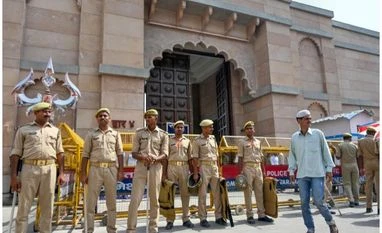
Gyanvapi Masjid
BS Web Team New Delhi
2 min read Last Updated : Sep 14 2022 | 9:17 AM IST
On Monday, the Varanasi District and Sessions Court dismissed the challenge by the Anjuman Intezamia Masjid Committee on the case filed by five women. In their plea, the women said they have the right to worship Maa Shringar Gauri on the outer wall of Gyanvapi Mosque, near the Kashi Vishwanath Temple. 

The women also argued that the Mosque was built after demolishing a part of the Temple by Mughal ruler Aurangzeb.

Here is everything you need to know in 10 points:

1. Kashi Vishwanath Temple and Gyanvapi Mosque are located adjacent to each other in the heart of Varanasi. 

2. In the 1990s, the property dispute began at the site when a suit was filed in a trial court in Varanasi to get five-year-long access to offer prayers behind the western wall of the Gyanvapi Mosque complex. 

3. The proceedings were challenged by Anjuman Intezamiya, saying that it violated Section 4 of the Places of Worship (Special Provisions) Act, 1991. 

4. The other side, however, argued that the original character of the Temple does not change and thus, the provisions of the act do not apply in the case. 

5. On October 13, 1998, the trial court stayed the proceedings after arguments from both parties. 

6. Under the provisions of the 1991 Act, all places of worship in the country will remain as they were on August 15, 1947, and cases seeking conversion of a place of worship to that of another religion or faith "shall abate."

7. In April, the Varanasi civil court ordered the filming of the Gyanvapi mosque based on the petition by the Hindu women. They claimed that there were idols of Hindu gods and goddesses in the Mosque complex. 

8. The report of the filming was submitted to the court in a sealed cover. However, the details were controversially released in the media just hours later. 

9. The filming was challenged in court. The petitioners said that it goes against the 1991 Act.  

10. However, in August, district judge AK Vishvesha reserved the order of the case and said that the judgement would be pronounced on September 12. 


One subscription. Two world-class reads.

Already subscribed? Log in

Subscribe to read the full story →
*Subscribe to Business Standard digital and get complimentary access to The New York Times

Smart Quarterly

₹900

3 Months

₹300/Month

SAVE 25%

Smart Essential

₹2,700

1 Year

₹225/Month

SAVE 46%
*Complimentary New York Times access for the 2nd year will be given after 12 months

Super Saver

₹3,900

2 Years

₹162/Month

Subscribe

Renews automatically, cancel anytime

Here’s what’s included in our digital subscription plans

Exclusive premium stories online

  • Over 30 premium stories daily, handpicked by our editors

Complimentary Access to The New York Times

  • News, Games, Cooking, Audio, Wirecutter & The Athletic

Business Standard Epaper

  • Digital replica of our daily newspaper — with options to read, save, and share

Curated Newsletters

  • Insights on markets, finance, politics, tech, and more delivered to your inbox

Market Analysis & Investment Insights

  • In-depth market analysis & insights with access to The Smart Investor

Archives

  • Repository of articles and publications dating back to 1997

Ad-free Reading

  • Uninterrupted reading experience with no advertisements

Seamless Access Across All Devices

  • Access Business Standard across devices — mobile, tablet, or PC, via web or app

Topics :VaranasiSupreme CourtIndian JudiciaryBS Web Reports

Next Story



