As the air quality index (AQI) dips into the poor category and is expected to drop further into the severe category in Delhi-NCR after Diwali, the sub-committee of the Commission of Air Quality Management (CAQM) has enforced Stage II measures of the Graded Response Action Plan (GRAP) in Delhi-NCR.
The 12-point action plan under GRAP II, among other measures, includes banning diesel generator sets and use of coal and firewood, including in tandoors in hotels, restaurants and open eateries.
Additionally, Delhi Chief Minister Arvind Kejriwal had also announced a 15-point Winter Action Plan to combat air pollution. While announcing the Winter Action Plan, Kejriwal had said that air pollution due to stubble burning remains a top concern at this time of the year.
Among other preventive measures, Delhi government has banned sale, storage and bursting of firecrackers in the capital city. Delhi is also going to start a 'Red Light on, Gaadi off' campaign to curb vehicular pollution for one month from October 28.
However, all these efforts do not seem to be enough to give respite to those living in Delhi-NCR. Despite a ban on stubble burning in neighbouring Punjab and Haryana, the farmers continue to burn stubble in the fields, which envelopes the capital city with pollutants during the winter season.
Environmental experts term all these efforts as 'temporary measures' which cannot give long-term results.
Talking to IANS, Chandra Bhushan, founder-CEO, International Forum for Environment, Sustainability & Technology (iFOREST), said that all such efforts to curb pollution can give results, but only for a short time.
"Instead, we need to think over the solution of this problem in long-term perspective as it has become an every year affair now. Solution to this problem is simple, but no one wants to go to the origin to eradicate the problem permanently. We need to understand where pollution comes from," he said.
Two main reasons for pollution are - what we burn and the dust that emanates from construction sites that mixes with the air, Bhushan said.
"We burn over 80 per cent of coal and biomass in the country. As long as we don't reduce the level of coal burning, air pollution can not be controlled. Secondly, the government should come out with an approach to control dust," Bhushan said.
Talking about pollution in Delhi-NCR, he said around 300 km radius is the air shed of Delhi-NCR which also includes the neighbouring states.
"If Delhi CM Arvind Kejriwal wants to fight pollution, first he should stop burning of wood which is used for cooking by the weaker sections of the scoiety and provide them with LPG," Bhushan said, adding that installing smog towers will not help.
"Because of Delhi's proximity to Thar desert, the dust comes during the winter and envelopes the region. On this aspect, the government has to intervene to stop dust transition. We must also reduce fuel dependency on coal. As long these two issues are not resolved, air pollution will continue to envelop the region," Bhushan said.
Apart from health, air pollution also impacts human productivity that ultimately leads to the nation's productivity, Ranjeet Mehta, Deputy Secretary General, PHDCCI, told IANS.
Talking about the impacts of pollution, Mehta said that we should not ignore the fact that it also impacts the productivity of humans living under polluted environments that have adverse impact on the economy too.
"Pollution impacts health first, which in turn affects an individual's productivity that in turn affects the city's industrial production and later the national productivity. Whenever there is an imbalance in the ecosystem, it creates disorder that ultimately leads to negativity, affecting our productivity," Mehta said.
--IANS
avr/arm

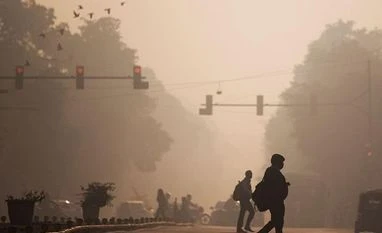 "GRAP-II a call for pre-emptive action on Delhi-NCR's 'poor' air pollution")


 Connect with us on WhatsApp