With Prime Minister Narendra Modi and Russian President Vladimir Putin jointly dedicating the first unit of the Kudankulam Nuclear power plant, Greenpeace India today questioned the Centre for pushing the venture which places communities and environment at "high risk" of nuclear contamination.
It said the venture is particularly "troubling" as India lacks preparedness to handle a nuclear emergency, and also it is at the odds with the Prime Minister's focus on Clean Growth.
The green body said solar and wind energy are far safer renewable alternatives to nuclear or thermal power.
"Safety aside, decentralised renewable energy provides a far better chance of protecting India's energy security as well as ensuring the fundamental right of energy access to over 200 million people," Greenpeace India campaigner Priya Pillai said.
Over the long-term, she said it would be in India's best interests to prioritise optimal utilisation of its existing power capacity, cut down on transmission and distribution losses, and continue to pursue its strategy of setting right financially distressed discoms and meeting its laudable renewable energy targets.
Noting that Kudankulam has a population of over 10 lakh and people living within a 30-kilometre radius of the plant, Greenpeace India, in its Red Alert report released in June, highlighted that population density around nuclear power plants in India poses a significant evacuation challenge in the event of an emergency.
India's current evacuation plans only provide support within a radius of 16 km in case of an offsite nuclear accident while for Fukushima, Japan had to set an evacuation zone of 30 km, it said.
Besides this, the manual for emergency guidelines are old and need to be relooked as the Atomic Energy Regulatory Board (AERB) has not updated its guidelines for last 26 years, it said.
The idea that we can secure the country's energy needs through nuclear power fails on all counts economically, socially and environmentally. There are important lessons to learn from the continued impacts of accidents like Chernobyl and Fukushima.
"Even if we were to ignore these lessons from global history, the close shave, we had earlier this year with the recent accident at Kakrapar nuclear power plant, should be adequate reminder of the reality.
"High-risk nuclear power is neither a viable solution, nor is it necessary, given the tremendous potential for renewable energy," Pillai said.
The first unit of the Kudankulam Nuclear plant was today dedicated to the nation jointly by Prime Minister Narendra Modi and Russian President Vladimir Putin with both the leaders calling it a fine example of special and privileged Indo-Russian strategic partnership.

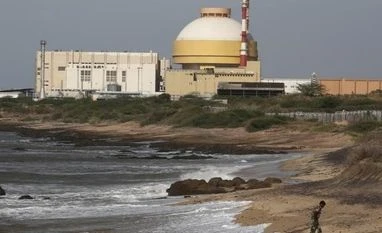 "Greenpeace questions govt for pushing high risk Kudankulam")


 Connect with us on WhatsApp