High cost of procuring RT-PCR machines might prove to be a hurdle in implementing the Delhi High Court's suggestion to ramp up RT-PCR testing in the national capital amid a surge in the cases, officials said on Thursday.
The Delhi High Court on Wednesday suggested that the AAP government increase the RT-PCR test capacity to the maximum possible to detect COVID-19 infection, as Rapid Antigen Tests (RATs) were only 60 per cent accurate.
The high court asked an expert committee, set by the Lieutenant Governor (LG), to convene a meeting on priority basis to consider the extent to which capacity of testing by RT-PCR should be ramped up.
The bench also noted that in the week from September 8-15, the testing done through RT-PCR was less than one-fourth of the total number of tests and rest was done by the RAT process.
The RAT process is considered less accurate as compared to RT-PCR dueto its high false negative rate. An RT-PCR machines costs Rs 15-20 lakh, officials said.
A senior Delhi government official told PTI, "We will need more RT-PCR machines to ramp up testing. These machines are quite expensive. It is not possible to make this kind of investments at this stage. The government can try, but it is already reeling under shortage of funds."
Another official from the city's north district said they have already issued directions to the staff to conduct more RT-PCR tests.
The official said they are following all the guidelines with respect to conducting tests by testing all symptomatic patients, who test negative on rapid antigen, by retesting them using the RT-PCR method.
"We will ask the staffers to follow all the norms and we might start testing mildly symptomatic patients using the RT-PCR method," the official added.
At present, the sanctioned strength of conducting RT-PCR is 14,000 per day in Delhi.
The high court had also expressed concern over continuous rise in COVID-19 cases, with nearly 4,500 new infections reported on Tuesday.
Nutan Mundeja, the head of the Directorate General of Health Services, said, "The court has ordered to do it. We will abide by its directions. We could ramp up the testing with the help of rapid antigen tests, as it is a point of care testing and the logistics is simpler."
"We have been following the ICMR guidelines. RT-PCR tests are being conducted on those having symptoms. These tests are not prescribed for asymptomatic cases," she said.
Also, Delhi has started on-demand testing, wherein symptomatic patients do not need a doctor's prescription to get themselves tested for coronavirus, Mundeja said.
Asked if RT-PCR machines being used for conducting other molecular tests can be diverted for COVID-19 testing, Mundeja said, "We have already diverted CB-NAAT machines meant for detecting tuberculosis. Every disease is equally important. And, other diseases are curable compared to COVID-19."
"If CB-NAAT is being used for tuberculosis diagnosis, ethically and professionally it should be used for TB rather than COVID-19, because TB is curable," she said.
"We will examine it (ramping up RT-PCR testing) and see what best we can do," she said.
While CBNAAT and TrueNat machines test fewer samples in a cycle, the tests are faster than a traditional RT-PCR test and can be used by hospitals' emergency departments.
Dr Alpana Razdaan, Lab Head, Genestrings Lab, said, "The RT-PCR tests are not happening in full capacity. Despite there being a limit of 14,000 tests daily, the number of RT-PCR tests being conducted is less.
"The government has to push for more tests. We have not received any guidelines from the government on increasing the RT-PCR tests. The testing has to be more efficient.
"Last month, 10-20 per cent of the samples were testing positive but now 30 to 40 per cent of the samples tested are positive on a daily basis. We do not know whether it due to the positivity rate going up or due to more testing being conducted.

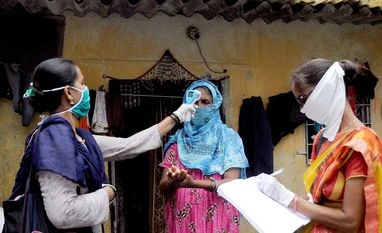 "High RT-PCR cost a hurdle in ramping up Covid-19 tests in Delhi: Officials")

