India's sudden peace push with nuclear rivals China, Pak shows Biden impact

The detente in South Asia shows all three countries responding to initiatives from the Biden administration
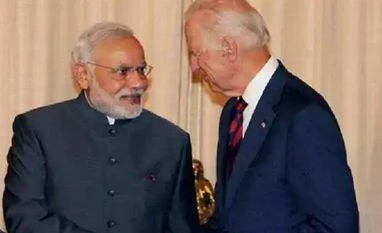
Modi, Biden
Bloomberg
4 min read Last Updated : Feb 26 2021 | 3:02 PM IST
After a year of some of the worst fighting on India’s frontiers with Pakistan and China, all three countries are suddenly talking peace as they wait to see how President Joe Biden will shift policy in the region.
 
India and China’s top diplomats on Thursday discussed plans to disengage troops from their Himalayan border, which last year saw the deadliest clashes since the 1970s. The phone call between Subrahmanyam Jaishankar and his Chinese counterpart Wang Yi, which stretched for more than an hour, came shortly after India and Pakistan released a rare joint statement by senior army officials announcing a halt in operations along their border.
 
The moves reduce tensions in one of Asia’s top flashpoints, where three nuclear-armed countries regularly challenge each other’s territorial claims. While India and Pakistan have fought three wars since Britain left the subcontinent and barely have any trade, tensions between New Delhi and Beijing escalated last year to the point where Prime Minister Narendra Modi banned hundreds of Chinese apps and slowed investment approvals.
 
The detente in South Asia shows all three countries responding to initiatives from the Biden administration, which is formulating policy toward the region following the unpredictable years of President Donald Trump. Pakistan wants to show the U.S. its not too close to China, Beijing wants to lower the temperature as Biden courts New Delhi and India is hedging its bets as it prepares to host BRICS leaders including Chinese President Xi Jinping later this year.
 
“On the one hand India hopes that the U.S.-China peer rivalry means India remains important and Pakistan -- as an ally of China -- will face more pressure,” said Aparna Pande, director of the Initiative on the Future of India and South Asia at Washington-based Hudson Institute. “But Delhi is not sure how strong Washington will be vis-a-vis Beijing, so a temporary ceasefire with Pakistan and slow disengagement with China may buy some time and relieve immediate pressure on India.”

Why Chinese and Indian Troops Are Clashing
 
India’s borders with Pakistan and China stretch nearly 7,000 kilometers (4,300 miles), much of which is disputed. Though India and Chinese troops have started pulling back their troops from some parts of the contested border in the remote Himalayan region, there are still areas where soldiers are facing off.
 
India’s Foreign Ministry said Jaishankar stressed to Wang the need to improve bilateral relations and ensure peace on the contested border between the two nations. Wang, meanwhile, called on China and India to firmly follow the right path of mutual trust and cooperation and “promote pragmatic cooperation,” Chinese state media reported.
 
New Delhi and Islamabad in 2003 signed a cease-fire agreement along their 742-kilometer (460-mile) Himalayan frontier, known as the Line of Control, but that truce has been violated repeatedly. Tensions worsened after August 2019 when Modi revoked the constitutional autonomy of its part of Kashmir, which is divided between India and Pakistan and claimed in its entirety by both.
 
‘No One Should Question’
 
“In the interest of achieving mutually beneficial and sustainable peace along the borders,” top military officials from both nations “agreed to address each other’s core issues and concerns,” they said in the statement.
 
The agreement “will save innocent lives so no one should question the intent,” Moeed W. Yusuf, special assistant to Pakistani Prime Minister Imran Khan, said on Twitter. “Nor should wrong inferences be drawn. There is nothing more than meets the eye here.”
 
The Biden administration welcomed the announcement on reimplementing the 2003 ceasefire agreement, which it had advocated. “When it comes to the US role, we continue to support direct dialogue between India and Pakistan on Kashmir and other issues of concern,” US State Department spokesman Ned Price told reporters.
 
Previous moves toward peace between India and Pakistan, including a statement in May 2018 after an escalation of cross-border shelling, have dissipated quickly. Whether they can actually build on this and move toward a more permanent peace remains an open question, but at least for the moment the shifting geopolitical winds are providing a seemingly rare opportunity to talk instead of fight.
 
“It eases the pressure,” Najmuddin Shaikh, Pakistan’s former foreign secretary and ambassador to nations including the U.S., said by phone when asked about the ceasefire. “Essentially what needs to come ahead is what has been proposed -- that there be a resumption of dialogue.”

One subscription. Two world-class reads.

Already subscribed? Log in

Subscribe to read the full story →
*Subscribe to Business Standard digital and get complimentary access to The New York Times

Smart Quarterly

₹900

3 Months

₹300/Month

SAVE 25%

Smart Essential

₹2,700

1 Year

₹225/Month

SAVE 46%
*Complimentary New York Times access for the 2nd year will be given after 12 months

Super Saver

₹3,900

2 Years

₹162/Month

Subscribe

Renews automatically, cancel anytime

Here’s what’s included in our digital subscription plans

Exclusive premium stories online

  • Over 30 premium stories daily, handpicked by our editors

Complimentary Access to The New York Times

  • News, Games, Cooking, Audio, Wirecutter & The Athletic

Business Standard Epaper

  • Digital replica of our daily newspaper — with options to read, save, and share

Curated Newsletters

  • Insights on markets, finance, politics, tech, and more delivered to your inbox

Market Analysis & Investment Insights

  • In-depth market analysis & insights with access to The Smart Investor

Archives

  • Repository of articles and publications dating back to 1997

Ad-free Reading

  • Uninterrupted reading experience with no advertisements

Seamless Access Across All Devices

  • Access Business Standard across devices — mobile, tablet, or PC, via web or app

Topics :Indo-US relationshipIndia China border rowIndia Pakistan relations

Next Story



