
Indian Himalayas hub for spiritual seekers, religious practitioners: Report
The Indian Himalayas is a hub for spiritual seekers and religious practitioners, attracting a plethora of religious figures over time
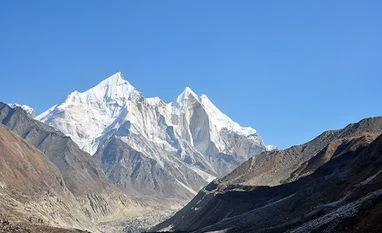 "Indian Himalayas hub for spiritual seekers, religious practitioners: Report")
WebinarsNew
Deep DiveNew
Explore Business Standard
The Indian Himalayas is a hub for spiritual seekers and religious practitioners, attracting a plethora of religious figures over time
The Indian Himalayas is a hub for spiritual seekers and religious practitioners, attracting a plethora of religious figures over time. The region has been a melting pot of diverse religious traditions for centuries, The Bhutan Live reported.
Among them, Padmasambhava and Go Tsangpa are two of the most significant religious figures who have had a profound impact on the Buddhist philosophy and teachings, and the religious landscape of the Indian Himalayas.
Padmasambhava also known as Guru Rinpoche, is widely regarded as the founder of Tibetan Buddhism. He was a spiritual master from India who lived during the 8th century CE. Padmasambhava is credited with spreading Buddhism in Tibet, India, Bhutan, and Nepal. He is revered as a great teacher, healer, and protector by many followers of Tibetan Buddhism.
Go Tsangpa, on the other hand, was a 14th-century Tibetan Buddhist master who spent a considerable amount of time in the Indian Himalayas. Go Tsangpa is known for his contributions to the development of the Drukpa Kagyu school of Tibetan Buddhism. He established several monasteries and meditation practice centres in the Indian Himalayas, including the famous Hemis Monastery in Ladakh, according to The Bhutan Live.
Though both Padmasambhava and Go Tsangpa were instrumental in the spread and development of Buddhism in the Indian Himalayas, their approaches to religious patronage were quite different.
Padmasambhava's approach was characterized by a more decentralized and flexible model of religious patronage. He encouraged the establishment of small, community-based monasteries that were supported by local patrons. His approach to religious patronage can be seen in the way he established monasteries and meditation practice centres in the region.
He did not emphasize the establishment of large monasteries or centralized institutions. Instead, he encouraged the establishment of smaller, community-based monasteries that were supported by local patrons. This approach allowed for greater flexibility and adaptability to the needs of the local communities.
Padmasambhava and Go Tsangpa, despite their differing approaches to religious patronage, offer significant contributions to the development of Buddhism in the Indian Himalayas. Their teachings and practices continue to influence the spiritual and religious traditions of the region to this day.
Important insights into the development of Buddhism in the Indian Himalayas and also Bhutanese Buddhism is offered by the religious patronage models of Padmasambhava and Go Tsangpa. While Padmasambhava's approach emphasized decentralization and community-based patronage, Go Tsangpa's approach was more centralized and hierarchical. Both models were successful in their own ways and contributed to the development of a rich and diverse religious landscape in the Indian Himalayas.
(Only the headline and picture of this report may have been reworked by the Business Standard staff; the rest of the content is auto-generated from a syndicated feed.)
First Published: Mar 18 2023 | 4:46 PM IST

