JNU row: Le Monde editorial attacks Modi's 'worrisome nationalism'
Refers to Kanhaiya Kumar's arrest under sedition 'strange'; calls for French govt's intervention
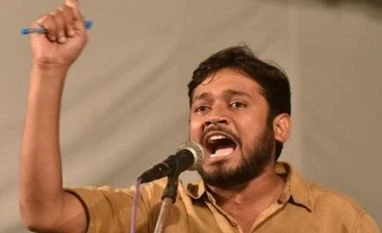
Bhaswar Kumar New Delhi Amid a controversy over anti-India slogans being raised at Delhi’s Jawaharlal Nehru University (JNU), and the subsequent arrest of the university student union’s president Kanhaiya Kumar, an editorial piece in the French newspaper Le Monde on Sunday asked the French government to raise human rights concerns with the Indian government.
“The arrest of a student of JNU and a former professor in Delhi, accused of ‘sedition’, is the latest illustration of the authoritarian drift of a Hindu nationalist government...,” said the piece. It added, even as the reasons for these arrests remain unclear, students have held multiple demonstrations across the country.
The editorial, titled ‘In India, the worrisome nationalism of Modi’, described the attempt by “Hindu nationalists” to “defend the Indian flag” as “paradoxical”. It went on to say that attempts by such individuals or organisations to “pose as defenders of the nation” was “curious” because they had been engaged in an attempt to undermine secularism, which it described as “one of the pillars of the Indian democracy since independence”.
Read more from our special coverage on "JNU ROW"
Not stopping its attack there, the piece went on to call the arrest of the JNU students’ union leader Kanhaiya Kumar and a teacher under a colonial-era law, which was used to imprison Mahatma Gandhi, as “strange”.
Calling the freedom of speech in India a result of the country’s long and rich heritage dating back to the rule of emperor Ashoka, the editorial said it had become a “luxury” in today’s India.
It also charged the Modi government with targeting non-governmental associations and organisations, particularly those campaigning for the defence of the environment.
The piece also alleged the French government was ignoring such concerns and said the economic opportunities offered by “a country with one of the highest growth rates in the world” had ensured the silence of the international community on such issues.
France had given priority to “economic diplomacy” and big contracts offered by India, said the piece, adding trade relations did not prohibit raising human rights issues.
In a subcontinent housing a third of humanity, the Indian democratic model could serve as an inspiration to neighbouring countries in the grip of authoritarianism like Bangladesh and the Maldives, said the piece. The piece concluded by saying it would be tragic if Prime Minister Narendra Modi sacrificed that part of the Indian identity.

 "JNU row: Le Monde editorial attacks Modi's 'worrisome nationalism'")


 Connect with us on WhatsApp