India has called for a meaningful dialogue among all states possessing nuclear weapons to build trust and confidence and for reducing the salience of atomic weapons in international affairs.
"India remains committed to the goal of a nuclear weapons freeworld and the complete elimination of nuclear weapons consistent with the highest priority accorded to nuclear disarmament, India's Permanent Representative to the UN, Syed Akbaruddin, said in his remarks at the high-level plenary meeting to commemorate and promote the International Day for the Total Elimination of Nuclear Weapons yesterday.
He said that this goal can be achieved through a step- by-step process underwritten by a universal commitment and an agreed global and non-discriminatory multilateral framework.
"There is need for a meaningful dialogue among all states possessing nuclear weapons to build trust and confidence and for reducing the salience of nuclear weapons in international affairs and security doctrines, the Indian diplomat said.
India, he said, considers the Conference on Disarmament - the world's single multilateral disarmament negotiating forum -- as the appropriate forum for the commencement of negotiations on nuclear disarmament.
Akbaruddin regretted that the conference has been prevented from adopting a programme of work that reflects the international community's desire for progress on nuclear disarmament and nonproliferation in all its aspects.
"For its part, India stands ready to commence negotiations in the Conference on Disarmament on a comprehensive Nuclear Weapons Convention on the lines of the Chemical Weapons Convention, the only comprehensive and internationally verifiable treaty so far banning an entire category of weapons of mass destruction and providing for their elimination, the top Indian diplomat said.
Further, India supports the commencement of negotiations in the Conference on Disarmament on a Fissile Material Cut-off Treaty, he said.
"We believe that increasing restraints on the use of nuclear weapons would reduce the probability of their use whether deliberate, unintentional or accidental, and this process could contribute to the progressive de-legitimisation of nuclear weapons, an essential step for their eventual elimination, as has been the experience for chemical and biological weapons, Akbaruddin said.
Earlier in his remarks, UN Secretary-General Antnio Guterres said the only world that is safe from the use of nuclear weapons is a world that is completely free of the nuclear weapons themselves.
"The goal of such a world is universally held, but of late it has been subject to numerous challenges," he said.
Condemning a series of nuclear and missile tests by North Korea, the UN chief said Pyongyang's "provocative" actions have heightened tensions and highlighted the dangers of proliferation.
"I again condemn these acts unequivocally, and I welcome the Security Councils firm action on the situation, as well as its desire for a peaceful, diplomatic and political solution, the UN Secretary General said.
Speaking on behalf of the Non-Aligned Movement, Jorge Arreaza, Venezuelas Minister for Foreign Affairs, urged countries to support the convening of an international conference on nuclear disarmament at the United Nations no later than 2018.
"As long as nuclear weapons exist, the risk of proliferation exists, emphasising the need for a new comprehensive and systematic approach to disarmament," he said.
Reiterating his countrys commitment to a nuclear- weapon-free world, Sun Lei of China pointed out the current uphill battle in the areas of disarmament and non- proliferation.
"Nuclear weapons are like the sword of Damocles hanging over the world and it is imperative to ban them," he said and called on all sides to embrace a security vision that included cooperation and the promotion of the peaceful use of nuclear energy.
He said China's nuclear strategy is based on the principle of self-defence while respecting a moratorium on testing and a no-first-use commitment.
Khalil Hashmi of Pakistan said global efforts to regulate, reduce and prevent the spread of nuclear weapons are facing serious challenges.
Lack of progress among nuclear-weapon states has negatively impacted global disarmament efforts, eroding international consensus on related issues, as evidenced by the failure of negotiations in the Conference on Disarmament, he said.

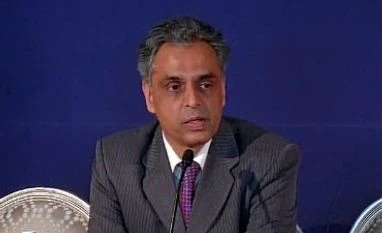 "Need to build trust, confidence among all nuke weapon states: India")


 Connect with us on WhatsApp