Home / India News / Panel of experts discuss plight of girl child
Panel of experts discuss plight of girl child
It has recommended a review of the PCPNDT Act which covers the sex determination tests
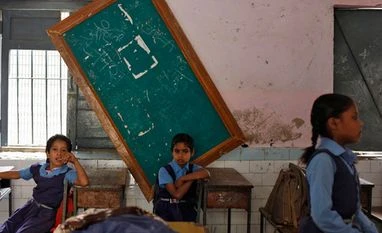
WHEN ALL WORK HAPPENS ON PAPER: Bureaucrats in the education departments are so busy with paperwork that they have no time to deal with school problems
With the falling sex ratio in the country, a committee that met in Bengaluru has suggested considering additional methods to improve the sex ratio including social change. It has recommended a review of the PCPNDT Act which covers the sex determination tests. They felt that the act and the rules therein should be simplified and implemented uniformly for better compliance.
The National Steering Committee on the Pre-Conception and Pre-Natal Diagnostic Techniques Act (PCPNDT Act), comprising of experts from the major national medical societies came together in Bengaluru to deliberate on the plight of the girl child and steps to improve the altered sex ratio.
Among the associations represented at the meet were The Association of Healthcare Providers - India (AHPI), the Cardiological Society of India (CSI), the Federation of Obstetrics and Gynaecological Societies of India (FOGSI), the Indian Federation of Ultrasound in Medicine and Biology (IFUMB), the Indian Medical Association (IMA), the Indian Radiology and Imaging Association (IRIA) and the Indian Society of Assisted Reproduction (ISAR). The members expressed grave concern over the declining sex ratio despite the existence of the PCPNDT Act for over twenty years.
The purpose for which this act was promulgated has not been achieved. Instead, in its current form, the implementation of the PCPNDT Act has deprived the poor and needy population (especially women and children) of life-saving and essential ultrasonography. "It is well-known and medically accepted that as a non-invasive, cost-effective and accurate diagnostic tool, this modality can help reduce maternal and infant mortality," said the panel said in a statement.
Applications of ultrasound encompass all specialities of the medical field, particularly in emergencies. The committee also took cognisance of the fact doctors and other medical professionals were being put to extreme hardship while performing routine and essential scans to the extent of denying the facility of life-saving ultrasonography to the poor and needy population, especially women and children.
As noted in an inter-agency statement released by the Office of the High Commissioner for Human Rights (OHCHR), United Nations Population Fund (UNFPA), UNICEF, UN Women and WHO, "Despite these legal measures, it is difficult to prove that any particular ultrasound examination was used to determine sex rather than for other appropriate and legitimate reasons. An ultrasound examination has many appropriate medical uses, such as determining the age of the foetus, monitoring its healthy development and detecting abnormalities," added the panel.
Communicating the sex of the foetus can be done discreetly, even silently, and prosecuting offenders is therefore practically impossible. Similarly, proving that a particular abortion was sex-selective is equally difficult.
Following an ultrasound examination, women can go to a different clinic to have an abortion while providing a reason that is acceptable within the legal framework. Because of these and other difficulties in implementing restrictions on the use of technologies and services for a particular reason, restrictions tend to become more encompassing, the panel said.

 "Panel of experts discuss plight of girl child")


 Connect with us on WhatsApp