Delhi airport says peak-hour flights reduced at T3 to ease congestion

Country's busiest airport, which has already brought the number down from 22 an hour to 19, may shift more flights to other terminals
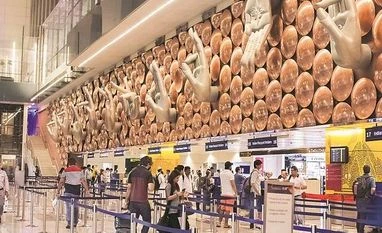
Delhi airport
Delhi airport, which is the country’s busiest, handles over 1100 flights daily. T3 is the busiest of its three terminals.
Aneesh Phadnis Mumbai
2 min read Last Updated : Dec 10 2022 | 12:23 AM IST
Delhi airport has proactively reduced the number of peak hour flights at the T3 terminal from 22 per hour in pre-Covid time to 19 in November and is looking to shift more flights to other terminals to reduce congestion.

Delhi airport, which is the country’s busiest, handles over 1,100 flights daily. T3 is the busiest of its three terminals. Between December 1-7, T3 handled 503 domestic and 253 international flights. In contrast, terminals T1 and T2 handled 180 and 243 domestic flights respectively.

The pick-up in air traffic before the holiday season has put a strain in airport infrastructure resulting in long queues at security and immigration. Shifting of flights from T3 to other two terminals is being discussed to ease congestion.

For the past seven days, nation-wide domestic traffic has surged  to over 400,000 passengers daily. Delhi handled an average 1,95,775 passengers (domestic plus international) daily between December 1-7.

“We are currently working to bring the number of flights further down. We are in touch with the airlines and working on a number of flights that can be shifted to T1 and T2,” Delhi International Airport Limited said in a statement.

The airport operator said the impact on on-time performance and challenges in passenger connections from domestic to international and vice versa can be assessed only after the shifting of flights.

The steps are being taken following a review meeting chaired by civil aviation minister Jyotiraditya Scindia on congestion in busy airport terminals.

"We, along with stakeholders – CISF and Immigration, are working constantly to cope with the demand which includes deployment of additional systems and manpower. We have deployed additional manpower to guide passengers, especially at the key choke points,” DIAL said.

The airport operator is already using technology including an AI-based passenger tracking system for proactive monitoring and messaging passengers on wait times inside the terminals.

One subscription. Two world-class reads.

Already subscribed? Log in

Subscribe to read the full story →
*Subscribe to Business Standard digital and get complimentary access to The New York Times

Smart Quarterly

₹900

3 Months

₹300/Month

SAVE 25%

Smart Essential

₹2,700

1 Year

₹225/Month

SAVE 46%
*Complimentary New York Times access for the 2nd year will be given after 12 months

Super Saver

₹3,900

2 Years

₹162/Month

Subscribe

Renews automatically, cancel anytime

Here’s what’s included in our digital subscription plans

Exclusive premium stories online

  • Over 30 premium stories daily, handpicked by our editors

Complimentary Access to The New York Times

  • News, Games, Cooking, Audio, Wirecutter & The Athletic

Business Standard Epaper

  • Digital replica of our daily newspaper — with options to read, save, and share

Curated Newsletters

  • Insights on markets, finance, politics, tech, and more delivered to your inbox

Market Analysis & Investment Insights

  • In-depth market analysis & insights with access to The Smart Investor

Archives

  • Repository of articles and publications dating back to 1997

Ad-free Reading

  • Uninterrupted reading experience with no advertisements

Seamless Access Across All Devices

  • Access Business Standard across devices — mobile, tablet, or PC, via web or app

Topics :Delhi airportflightsAir Traffic CongestionimmigrationAirport securityAviation sectorAir trafficAirline sectorAir passengerIndian airportsIndian airlines

Next Story



